Live and Learn Farm

  • Home
    • About Us
    • Contact Us!
  • HomeSchool
    • All Inclusive
    • Apologia
    • Arts
    • Bible
    • Civics
    • Current Events
    • Curriculum
    • Elementary
    • Geography
    • History
    • Language Arts
    • Math
    • Middle School
    • Montessori
    • Other
    • Practical Life Skills
    • Science
    • Writing
  • Link Ups
    • Monday Middle & High School Link Up
  • Montessori
  • Teen Blogs
    • Gage – 13 Years Old
    • Chase – 14 Years Old
    • Blake – 10 Years Old
  • Shop
    • Cart
    • Checkout
    • My Account
  • Free!!!
  • Other Topics
    • Blogging
      • Facebook Series
    • Farmstead
      • Chickens
      • Cows
      • Permaculture Garden
    • Mom
You are here: Home / Archives for Montessori

Kids on Location

April 30, 2013 By: Trish Corlewcomment

Kids on Location

I’ve been brainstorming ideas for our homeschool on what we can do to keep the momentum going through the summer.  And I’ve come up with some ideas my children were ecstatic about!  I want to share these ideas with you and hope that not only will you like the ideas, but that you and your children will participate too!!  So here goes… We have created a page on our blog called “Kids On Location”.  We are going to create a Thursday linky party for posts about the children going on location, like a news broadcaster when they are reporting live on location.  
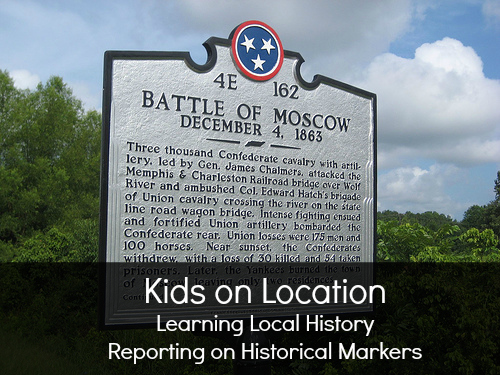
Historical MarkersThe First Idea:  Learning about our local history via Historical Markers.  I don’t know about y’all, but I’m a transplant to this area and I don’t know much about our own local history.  Every couple of weeks, the boys and I will identify our closest historical markers and we will spend an afternoon driving to these markers. You can find your neighborhood historical markers at this national database.  Thank you Jimmie Lanley for posting this link on your Google plus Account, it really got me brainstorming, as you see 🙂   The boys will photograph the markers and the item the marker is describing (if applicable).  They will note the location, the roads (and closest cross roads), the closest towns, the GPS coordinates, etc.  Then each child will pick one historic marker to research and write a news report on for the week. Here is a Historic Marker Form with Prompts  to help our budding reporters develop ideas on how to report on the markers.  Your children might even decide they want to return to the location and give their news report about the Historic Marker via video!  I know some children would love being in front of the camera and others would love to be behind the camera. 
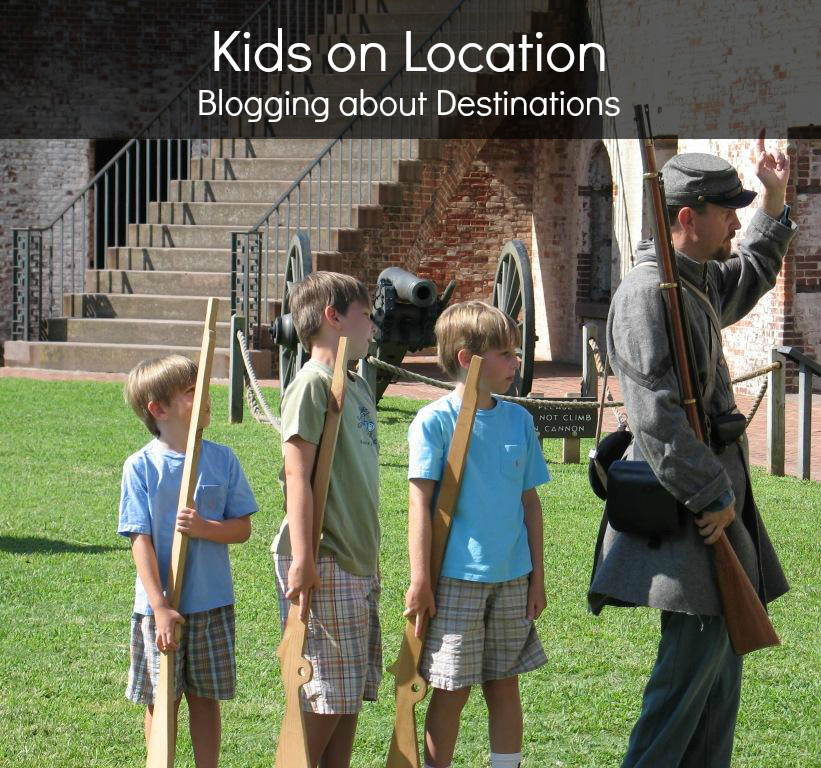
Kids on LocationThe Second Idea:  When we go on field trips, family outings and vacations this summer, have our children report about these destinations. Here is a Kids on Location form that will provide some prompts to help get them started.   And just like before, the children might enjoy doing a recording of them “on location”.  I think this would certainly be considered public speaking training … don’t you?  


Okay, so here is the most unusual aspect of this whole idea:

Teen BloggersLet’s give our children “guest blogger” status on our blogs for the summer and let them do the reporting on this project!  They will upload their own reports to Kids on Location (via the Thursday linky).  You will still have complete control over the publication because guest bloggers’ articles must be approved before they are published.  I am already doing this with my eleven year old son.  Gage has started blogging about his chicken business, Deluxe Clucks.  I cannot even begin to tell you all the positives I’m seeing.  He is WRITING!!!  Hallelujah!  Not only is he writing but he loves it and he loves blogging!  Now, think about it… even if your child only creates one report a week, that is the equivalent of one research project … but without having to pull teeth, without any arguing AND it’s continues the momentum through the summer!  There are so many other positive aspects I’m seeing that I could share but, just imagine for a second….  Your child excited and motivated about writing!  My boys have been doing the IEW / Beautiful Feet Geography Curriculum and writing about Holling Clancy Holling’s books and they have been loving it. But this is really the next level.  Our children imitate us and they certainly see us blogging… so this would give them some real world experience and isn’t that what our homeschools are to be… training for the “real world”?   I think this entire project could really inspire our children and they would have fun at the same time!  If my children were any indication, I think your children will be excited to do this!  

Finally, we will feature a few reports each week that you, the readers, choose.  The Linky will have a “like” button for each link and our readers get to decide who will be featured each week by who gets the most likes.  We have created a button for both the linky and the featured reporter… what do you think of them?
Kids on Location Linky Button


Kids on Location Reporter Button


I am really anxious to hear your feedback!  Please share with me your thoughts, concerns, and ideas!  And then tell me you are in!  I’m hoping we can start the linky party maybe the middle of May?  Does that work for everyone?  


If you like this post, please share it!

  • Share on Facebook (Opens in new window) Facebook
  • Share on Pinterest (Opens in new window) Pinterest
  • Share on X (Opens in new window) X
  • Print (Opens in new window) Print
  • More
  • Email a link to a friend (Opens in new window) Email
  • Share on Reddit (Opens in new window) Reddit
  • Share on LinkedIn (Opens in new window) LinkedIn
  • Share on Tumblr (Opens in new window) Tumblr

Like this:

Like Loading…

Parts of a Feather

April 17, 2013 By: Trish Corlew3 Comments

As most of you are aware, we are in chicken mode right now with Gage’s business (Deluxe Clucks) starting and the brooder webcam up and running (see right sidebar and click play to watch).  We have been contacted by some local homeschoolers to come out for field trips, so we are in the process of getting ready for them to start.  As part of the homeschool field trips, I’m creating various works to help teach them more about chickens.  This lesson is about parts of a feather and it is one of a series of posts on basic Chicken Anatomy. Be sure to visit the other posts too!  You can find them here:  Hands On Chicken Anatomy Lessons and Bird’s Nest study.  

Parts of a Feather Free 3 part cardsFeathers are pretty amazing!  They are extremely strong, yet lightweight.  There are actually five basic types of feathers:  

  • Contour
  • Down
  • Semiplumes
  • Filoplumes
  • Bristles

This would be a great time to go on a nature scavenger hunt to find some feathers.  Grab a magnifying glass or a microscope to study your feathers more closely!  If you do not have access to feathers or a microscope, here are some pictures and another set is here for you to be able to see them up close.  For the Parts of a Feather study, I drew a contour feather.  I will be creating a work about the various types of feathers. Here is a set of nomenclature cards I drew and made for parts of a feather.

Most feathers have a couple of feathers in common:  

  • Most feathers have a thick hard pole down the center of the feather.  This is called the Shaft.  It is made of Keratin (the same material our fingernails are made of).  Birds cannot feel the shaft, therefore it does not hurt the bird to clip their wings.  
  • The Quill is where the feather attaches to the Bird.  Quills were used to write with long ago.  It was dipped into ink and the ink would go up the shaft a little way.  
  • The soft part of the feather is called the vane.  If you can look at this part through a microscope or magnifying glass, you will see that it has tiny hairs called barbs.  Those hairs also have tiny hairs called barbules.  They function like a hook and latch… making the wing vanes act like a zipper.  
  • Some feathers are fuzzy, these are called Down Feathers.  This  is where the barbs do not have barbules so they cannot hook (or zip) together.  Down feathers do not have a shaft.  Every bird has down feathers under it’s contour feathers.  

All birds molt.  It is where the bird loses its old feathers and grows new ones.  Why do birds molt?  Simply, because their feathers get old and beat up.  Most birds molt gradually losing a few feathers at a time.  There are a few birds that lose their feathers all at once.  Doesn’t that sounds like a great research project to figure out which ones do this?!?  

If you don’t know where to begin to teach zoology to your students, we used Apologia’s Exploring Creation with Zoology, Flying Creatures Book. For more information about how I take traditional curriculum and make them more hands-on and Montessori-ish, look here under the Zoology and Botany tags.   

I’ll be covering more basic anatomy information about chickens (and birds in general, like this lesson), so stay tuned!  

Until next time… 

If you like this post, please share it!

  • Share on Facebook (Opens in new window) Facebook
  • Share on Pinterest (Opens in new window) Pinterest
  • Share on X (Opens in new window) X
  • Print (Opens in new window) Print
  • More
  • Email a link to a friend (Opens in new window) Email
  • Share on Reddit (Opens in new window) Reddit
  • Share on LinkedIn (Opens in new window) LinkedIn
  • Share on Tumblr (Opens in new window) Tumblr

Like this:

Like Loading…

Hands-on Chicken Anatomy Lessons

April 14, 2013 By: Trish Corlew17 Comments

As most of you know, we are in full out chicken mode right now with Gage’s business assets arriving (chicks) and with the webcam up and running (see link in the right hand column, click play), I thought this would be a perfect time to start an in-depth, hands-on study about chickens!  I will even attempt to answer the proverbial question, “which came first, the chicken or the egg?”.  Read to the bottom for that one 🙂  In the meantime, let’s get to some hands-on chicken anatomy lessons!

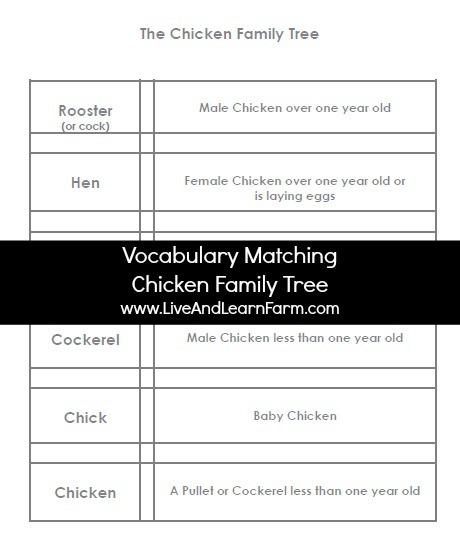
Vocabulary Matching Chicken Family Tree


The first thing that I teach about chickens is the vocabulary.  Most areas of study or professions have a certain vocabulary that is associated with that particular topic.  Chickens are no exception.  Some of the vocabulary will be very familiar, but some won’t be.  I try to use the correct vocabulary for all the works in a particular area, so this is the first document to present to your students.  I call it the Chicken Family Tree because so much of it surrounds the names of the chickens at different stages of their life.


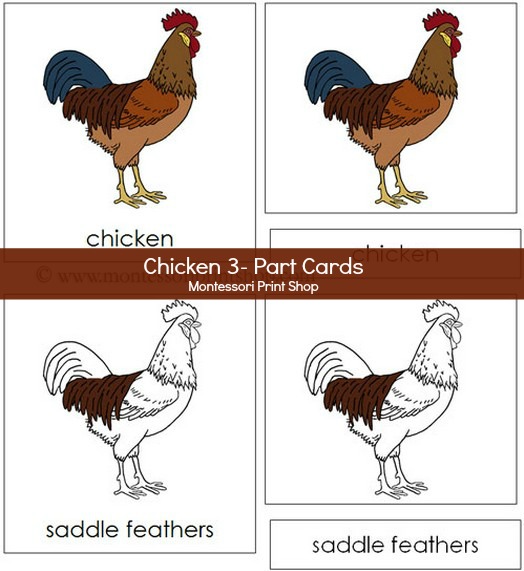
Chicken 3 Part Cards Montessori Print ShopThe next area I typically teach is the anatomy of a chicken.  Montessori Print Shop has a beautiful set you can purchase.  If you are not in a position to purchase them, here is another set of chicken anatomy that I found this is free.  Unfortunately, I don’t remember where I got these, if you know who to give credit to, please let me know!  

I know some people consider nomenclature (3 Part) cards to be just for young students, but I use them with my older boys all the time.  If you are a visual learner (I am and two of my boys are), we like to see it… so we continue to use nomenclature cards even though they are 9, 11, and 13  (and I’m 47) now.  It’s all about following the child to teach them the way they learn the best!  Anatomy is the same across breeds but not across gender.  So any set of chicken anatomy cards needs to distinguish if they are defining anatomy of a hen or a rooster.  Here is a great chart of the differences between hens and roosters.  


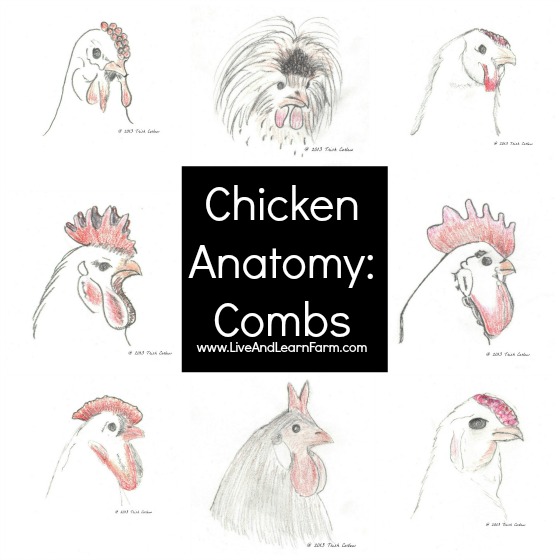
Chicken Anatomy Cones Free 3 part CardsDid you know chickens can’t sweat? Since they do not sweat, they lose a primary way to cool their body down.  Instead, chickens have combs and wattles to help them regulate their body temperature. But not all combs and wattles are created the same. I have created a Chicken Anatomy Combs work to show the reason for the differences and variations.  The comb variations are usually based on breed and gender.  The comb is not just a means to cool off, it is also used to attract a mate.  In addition, when a young female chicken (called a pullet) is ready to start laying eggs, her comb will turn from pink to red.  


Since we are now discussing various chicken breeds, there is a great chart here to help your children see all the variations in each breed.

Now, back to the question about the chicken and the egg and which came first… if you believe in the Bible, it answers this question for us.  

Gen 1:20 And God said, Let the waters bring forth abundantly the moving creature that hath life, and fowl that may fly above the earth in the open firmament of heaven.
Gen 1:21 And God created great whales, and every living creature that moveth, which the waters brought forth abundantly, after their kind, and every winged fowl after his kind: and God saw that it was good.
Gen 1:22 And God blessed them, saying, Be fruitful, and multiply, and fill the waters in the seas, and let fowl multiply in the earth.
Gen 1:23 And the evening and the morning were the fifth day.

Since I’m pretty sure there were not any eggs walking around, it would mean the chicken came first 🙂

I have so much more to cover regarding chickens, but this is a good place to stop for this study.  I’ll be posting much more on chickens since it appears we will be spending much of our time with our new chicks.  We recently received a request to host some homeschool field trip days, so we will be creating lots of works to teach our guests when these field trips start.  

Until next time….

If you like this post, please share it!

  • Share on Facebook (Opens in new window) Facebook
  • Share on Pinterest (Opens in new window) Pinterest
  • Share on X (Opens in new window) X
  • Print (Opens in new window) Print
  • More
  • Email a link to a friend (Opens in new window) Email
  • Share on Reddit (Opens in new window) Reddit
  • Share on LinkedIn (Opens in new window) LinkedIn
  • Share on Tumblr (Opens in new window) Tumblr

Like this:

Like Loading…

New HUGE Brooder Box

April 8, 2013 By: Gage18 Comments

Good afternoon!  Yesterday as we approached four days until the chicks would arrive, I knew we had to come up with a huge brooder box design.  Our current cattle trough brooder just won’t hold 33 chicks.  

Cattle Trough Chick Brooder Box


I’ve been researching brooders,  the cattle trough and dog kennel designs would not work nor would any of the other designs we looked at.  I visited BackYard Chickens to see the suggestions out there.  They have a long list of ideas, but I needed something that would hold 30 chicks and to make it out of things we already have here.  


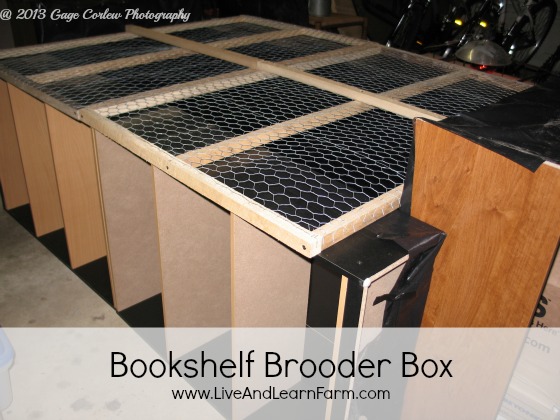
Bookshelf Brooder Box


Dad and I were in the barn looking at some cabinets we have but they looked too small to me.  So, I decided to use some old book shelves we have in the garage.  They were left over from our recent classroom redesign and I knew I could arrange them into a large brooder box.  We moved them into the shape of a rectangle  (5’4″ x 2’3″) and taped large garbage bags onto the backs of the bookshelves so they would not get ruined.


Brooder Box Cover

After we got the bookshelves in place and bags taped on the backs,  Dad and I started making the cover to the brooder box.  We made it out of tomato stakes and chicken wire.  We decided to use two covers instead of one giant one, which makes it easier to open.  There are only a couple of things that need to be done to be completely ready for the chicks to arrive:

  • put cardboard on the floor under the shelves
  • put some shavings in the bottom of the brooder
  • get another feeder
  • get another waterer
  • get another heat lamp
  • find a recipe for jump starter for the chicks when they first arrive to help them regain their strength


Today I met with our post office manager to ask if they would call me when the chicks arrive from Welp Hatchery this week.   I should be finished with the rest of this list by the time the chicks get here.  When I find a good kick-start recipe, I’ll post it here too.  

If you see anything that I have left out of the brooder or the things I need to get, please leave a comment down below.  I check them everyday after class.  

See ya’ soon!  


If you like this post, please share it!

  • Share on Facebook (Opens in new window) Facebook
  • Share on Pinterest (Opens in new window) Pinterest
  • Share on X (Opens in new window) X
  • Print (Opens in new window) Print
  • More
  • Email a link to a friend (Opens in new window) Email
  • Share on Reddit (Opens in new window) Reddit
  • Share on LinkedIn (Opens in new window) LinkedIn
  • Share on Tumblr (Opens in new window) Tumblr

Like this:

Like Loading…

Farmschooling – Montessori Middle School Part 2

April 4, 2013 By: Trish Corlew5 Comments

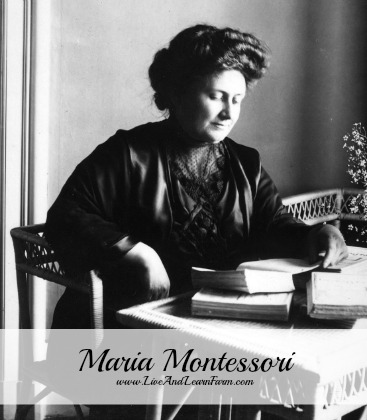
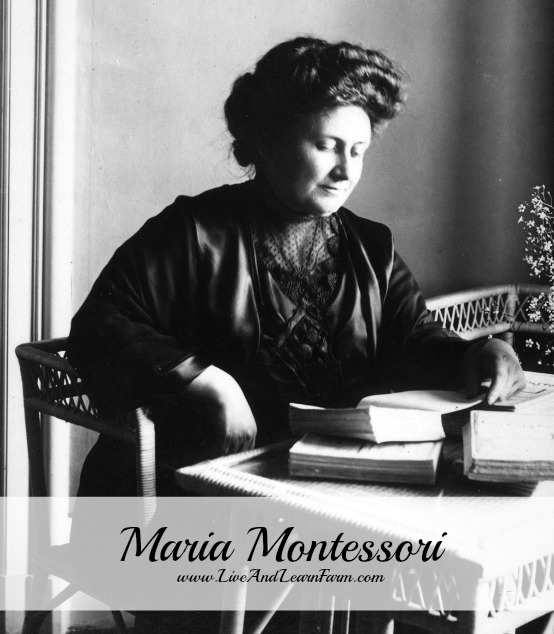
Maria Montessori Adolescent Middle School ErdkinderThis is part two of an ongoing exploration of Maria Montessori’s vision for middle school and high school. I’ve dubbed it Farmschooling – Montessori Middle School.  In part 1 we discussed what is going on in the teenage mind and how unsure of themselves they really are.  In part 2 we will explore some of the recommendations Montessori made for reaching our teens!  Again, I will be quoting from Montessori Today by Paula Polk Lillard. (Note we are a participant in the Amazon Services LLC Associates Program, an affiliate advertising program.  Any money received via this relationship is used for our homeschool!  PS. I’ve made a grand total of $0.00 from affiliate marketing… but the FTC says I have to tell you that IF you buy it, I will make 4% of the sale as commission.)  And, same as before, in some areas I will paraphrase and in other areas I will quote verbatim.

In part 1, we learned that the third plane child has a very difficult time concentrating and focusing.  However, Montessori still had faith in the teen’s abilities, even with their diminished concentration.  She believed in the benefits of academic knowledge and intellectual study,  and how important it is to grow and expand the field of knowledge.  Study, she believed, answers a need of the intelligence and therefore, does not cause mental fatigue, on the contrary, she believed that it regenerates and strengthens “the development of the mind.”  She further discussed that adolescents have a great need for creative expression.  This is not for the purpose of understanding art, but for their own means of self-expression and self-discovery.  

Maria Montessori discusses that the child’s natural drive for independence is further extended in the third plane into two new areas:

  •  a need to make a “direct contribution to society and have it recognized” and
  • a desire to become financially independent

We, as parents, need to encourage students in their efforts to achieve independence via helping them identify opportunities opportunities where they can experience stewardship and selflessness.  

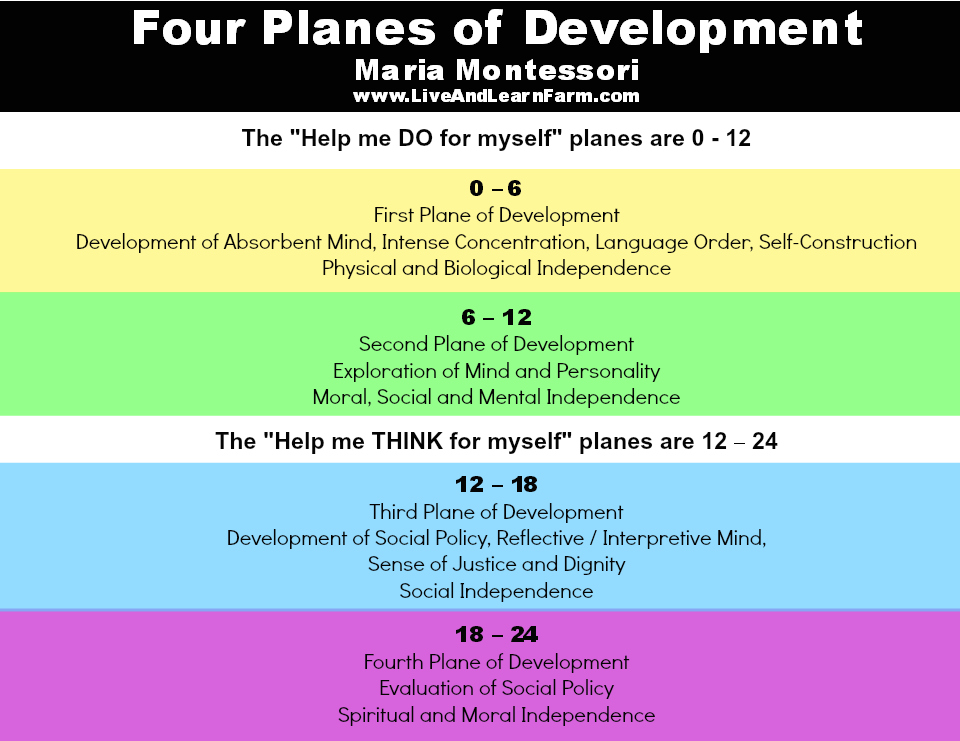
One of the teen’s primary focuses is to understand and explore reality, in both the natural world and in human organizations and institutions.  Their mantra shifts from “help me to do it myself” to “help me to think for myself”.  In the natural world, they want to test themselves, to test what they can do, how far, how fast, etc. and to explore what they can become.  So opportunities that might present themselves to explore would be work with Habitat for Humanity, hiking, backpacking, and various wilderness adventures.  In this plane, they are learning to use tools, work the land and develop skills for maintenance and repair of minor machinery.  

In the human organizations and institutions category, it perfectly matches their desire for financial independence, they want to explore:

  • commerce
  • trade
  • production and
  • economic exchange

At this stage they are learning to question deeply and research answers… with a focus on solving problems.  And the adults in their world NEED to listen to their teen, their reasoning, their conclusions, their ideas, their imagination.  Give them a voice and an avenue to be heard… not only at home but also in the larger world.  Get them involved in activities outside the home, especially environments where they can collaborate and work with other homeschoolers, such as coops, virtual homeschool classes, etc.  They need this interaction with peers where they can develop self confidence and explore their capabilities.  

For homeschoolers, this can be a challenge.  However, we have recently stumbled upon a fantastic organization Virtual Homeschool Group.  My boys have been taking middle school science, photography and Spanish via VHSG all this year and we are more than impressed.  I am shocked at how much my boys love the interaction with the teachers and students, the classes and the quality of instruction they are receiving.  And did I mention it is FREE?  Yep, and I’m not kidding.  We have been enrolled for this entire school year and the only money they received was a donation we gave ’cause we are so impressed!  There are ways to bring your homeschool students into this kind of peer rich environment!  Seek them out for your children!  

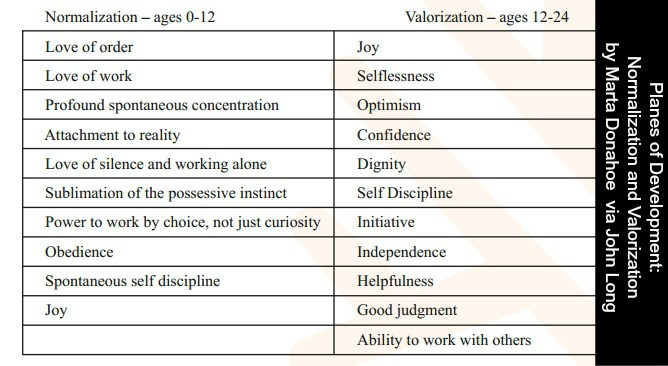
Montessori, like in all the planes before, continues the focus on development of the child’s personality.  In the younger child, this development of their personality is called “normalization”, in the third plane Montessori calls it “valorization of the personality”.  Valor’s root in Latin means strong or worthy… she defines it as:  “discovering and developing one’s own worthiness and strength”.  It is THE goal of the third plane teen.  

Normalization / Valorization Marta Donahoe

In the Cincinnati Montessori Secondary Teacher Education Program, Marta Donahue shared a chart that was shared with her 16 before from John Long.  It shows the characteristics the child is ready to develop in the lower plane of development and the third plane of development.  If we can remember what characteristics we are trying to develop, a well thought out plan can invoke these qualities… and bring forth valorization!

The vogue “self-worth” concept is NOT what Montessori meant by self confidence.  She referred to is as a practical notion grounded in the individual’s profound sense of REAL accomplishment.  In understanding their real limits and capabilities.  Success in life depends on a self-confidence born of a true knowledge of one’s capabilities, combined with the many-sided powers of adaptation…. and Montessori believed this can only be accomplished through work and direct experience of the environment.  

The challenge for the educator of the third plane (12 – 18) child is to develop an education plan that combines intellectual pursuits and discovery with REAL situations… both in nature and in society.  Montessori emphasized that subjects should be interlinked instead of divided into categories.  So all-inclusive curriculum or unit studies are absolutely something we will be investigating! We have one already identified that we are planning to use this summer.  It is called Paths of Exploration and we are already starting to make this curriculum more hands-on.  You can see these works here.   And, just as in the lower planes, students are encouraged to follow their interests.  Again the teacher is to serve as a guide.  

We can summarize part 2 with these thoughts.  Teens have a strong need to:

  • .  work
  •    be challenged
  •    be empowered
  •    work the land
  •    build community
  •    develop a personal vision 
Montessori's teen needs

Maria Montessori mentions six areas as the foundation of the academic program for the adolescent.  We will explore those in part 3.  

Until next time

If you like this post, please share it!

  • Share on Facebook (Opens in new window) Facebook
  • Share on Pinterest (Opens in new window) Pinterest
  • Share on X (Opens in new window) X
  • Print (Opens in new window) Print
  • More
  • Email a link to a friend (Opens in new window) Email
  • Share on Reddit (Opens in new window) Reddit
  • Share on LinkedIn (Opens in new window) LinkedIn
  • Share on Tumblr (Opens in new window) Tumblr

Like this:

Like Loading…

Pictures of Surprise Baby Chicks

April 4, 2013 By: Gagecomment

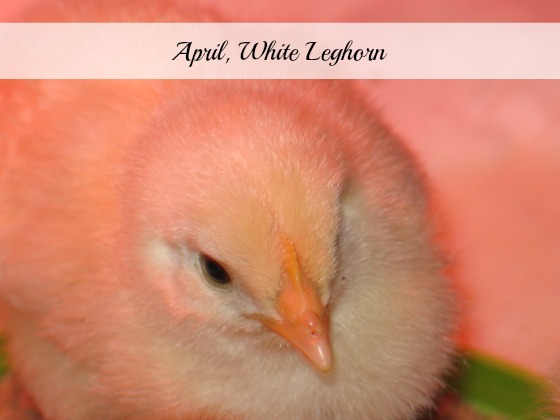
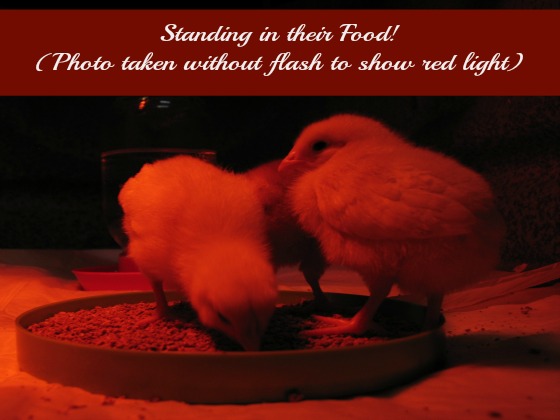
Good morning!  Sorry I did not get the pictures of the surprise baby chicks posted sooner.  We got two White Leghorns and one Red Sex Link. We got our brooder, which is an old metal cattle trough with the bottom cut out and sanded smooth, and we washed out the baby chick waterer and got a small lid for their food.  Next we were going to get our heat lamp but we discovered it was missing!  So we all went on a scavenger hunt for our missing heat lamp.  Talk about a small crisis … we had less than 30 minutes to go pick up the chicks but couldn’t find the heat lamp.  Dad won the scavenger hunt, finding the heat lamp at the barn and even an extra one.  We used red lights for the heat lamp because they are supposed to be easier for the baby chicks to rest under. I have named one of the Leghorns April.  We are still thinking about names for the other two.  I’ll keep you posted on the naming them.  Ms. Pamela, if you are reading this, thank you! 

Here are some pictures of our surprise baby chicks…. 


Surprise Baby Chick April

Standing in their food red light

Surprise baby chicks

See ya’ soon!

If you like this post, please share it!

  • Share on Facebook (Opens in new window) Facebook
  • Share on Pinterest (Opens in new window) Pinterest
  • Share on X (Opens in new window) X
  • Print (Opens in new window) Print
  • More
  • Email a link to a friend (Opens in new window) Email
  • Share on Reddit (Opens in new window) Reddit
  • Share on LinkedIn (Opens in new window) LinkedIn
  • Share on Tumblr (Opens in new window) Tumblr

Like this:

Like Loading…

Farmschooling – Montessori Middle School Part 1

April 4, 2013 By: Trish Corlew8 Comments

Maria Montessori AdolescentsI’m reading Montessori Today by Paula Polk Lillard again and this time I’m focusing on the adolescent / middle school aspects of Maria Montessori’s philosophy of education.  What I see in the homeschool world is many moms who are very excited about Montessori for their younger children.  However, finding middle school Montessori enthusiasts is rare.  In fact, I don’t know any other homeschoolers that are using Maria Montessori’s concepts for Middle School.  And that is a shame.  Montessori was brilliant and her pedagogy has withstood the test of time.  So, for those that are homeschooling and have children who are approaching middle school, I thought I would share what I’m learning and reading about Montessori middle schools … I’m calling this concept “farmschooling”.  This will be a long article with lots of detailed information, so I’m going to break it into several posts.  This is Part one and it will focus on the characteristics of this Third Plane of Development for adolescence.  It will certainly help you understand your teen better, at least it has helped me!  

Since not many folks are homeschooling with a Montessori slant, I thought I would explain some things we are doing and connect it with Montessori’s vision of an Erdkinder (middle school or adolescent envionment).  But I need to lay a bit of a foundation first before I jump straight into the teaching aspect.  In this post, I will be quoting from Montessori Today by Paula Polk Lillard.  (Note we are a participant in the Amazon Services LLC Associates Program, an affiliate advertising program.  Any money received via this relationship is used for our homeschool!  PS. I’ve made a grand total of $0.00 from affiliate marketing… but the FTC says I have to tell you that IF you buy it, I will make 4% of the sale as commission.)In some areas I will paraphrase and in other areas I will quote verbatim.  Suffice it to say, I think if you don’t have this book, you need to get it, especially if you are teaching 0-12 aged children.  It’s an easy reading book that really sums up Maria Montessori’s philosophy well.  When I was still the chairman of the board of our local Montessori school, we had multiple copies of this book on our bookshelf and we would literally hand them out to new families attending the school.  

Maria Montessori developed a theoretical framework of education for children from birth to adult.  She regarded the adolescent stage as a period of great vulnerability… she went so far as to liken it to the 0-3 stage.  Here’s why:  The infant is in a totally vulnerable state and requires careful attention and devotion on the part of adults, it is a new being, a child.  In this second period (adolescence), great weakness is apparent, and again, very special consideration must be given, a new creation is taking place but this time it is an adult.  Just like in the early stage where a child is in self-construction mode, so are adolescents.  During this stage they are introverted and self-conscious…. yet at the same time, they have a huge drive to join society as an adult member.  Therefore they show a keen interest in the social organization of the world around them, where they are trying to make sense of people’s behavior, in both the present and past. 

Maria Montessori Four Planes of DevelopmentIn the first plane of development (0 – 3) children are sensorial explorers, in the second plane (6 – 12) they are reasoning explorers, now in the third plane (12 – 18) they become human explorers… focusing on figuring out society and where they fit in.  Montessori believed that adolescents needed calm and solitude if they are to make sense of their self and the world.  She continued stating they are filled with doubts, hesitations, emotions and discouragement … being very sensitive, embarrass easily and lack confidence.  They have a great need for strengthening of self-confidence.  In addition, they have difficulty concentrating and are easily distracted.  

At the same time, adolescents are impressive intellectually.  They want to discuss big abstract ideas and reason through to conclusions, based on evidence.  They are interested in discussing moral and spiritual issues, the purpose of life and the meaning of death.  They like to debate what the author of a book is really saying, or an artist truly intended through his painting, or a composer expressing through their music.  They want to explore what others are thinking and feeling and are perceptive about their strengths and weaknesses.   

Montessori had a deep faith in the benefits of academic knowledge and intellectual study in spite of the adolescent’s diminished capacity to concentrate and we will explore how she proposed teaching adolescents in the next post.  Here is Part 2

Until next time….


If you like this post, please share it!

  • Share on Facebook (Opens in new window) Facebook
  • Share on Pinterest (Opens in new window) Pinterest
  • Share on X (Opens in new window) X
  • Print (Opens in new window) Print
  • More
  • Email a link to a friend (Opens in new window) Email
  • Share on Reddit (Opens in new window) Reddit
  • Share on LinkedIn (Opens in new window) LinkedIn
  • Share on Tumblr (Opens in new window) Tumblr

Like this:

Like Loading…

Introducing….. Deluxe Clucks

April 2, 2013 By: Gage21 Comments

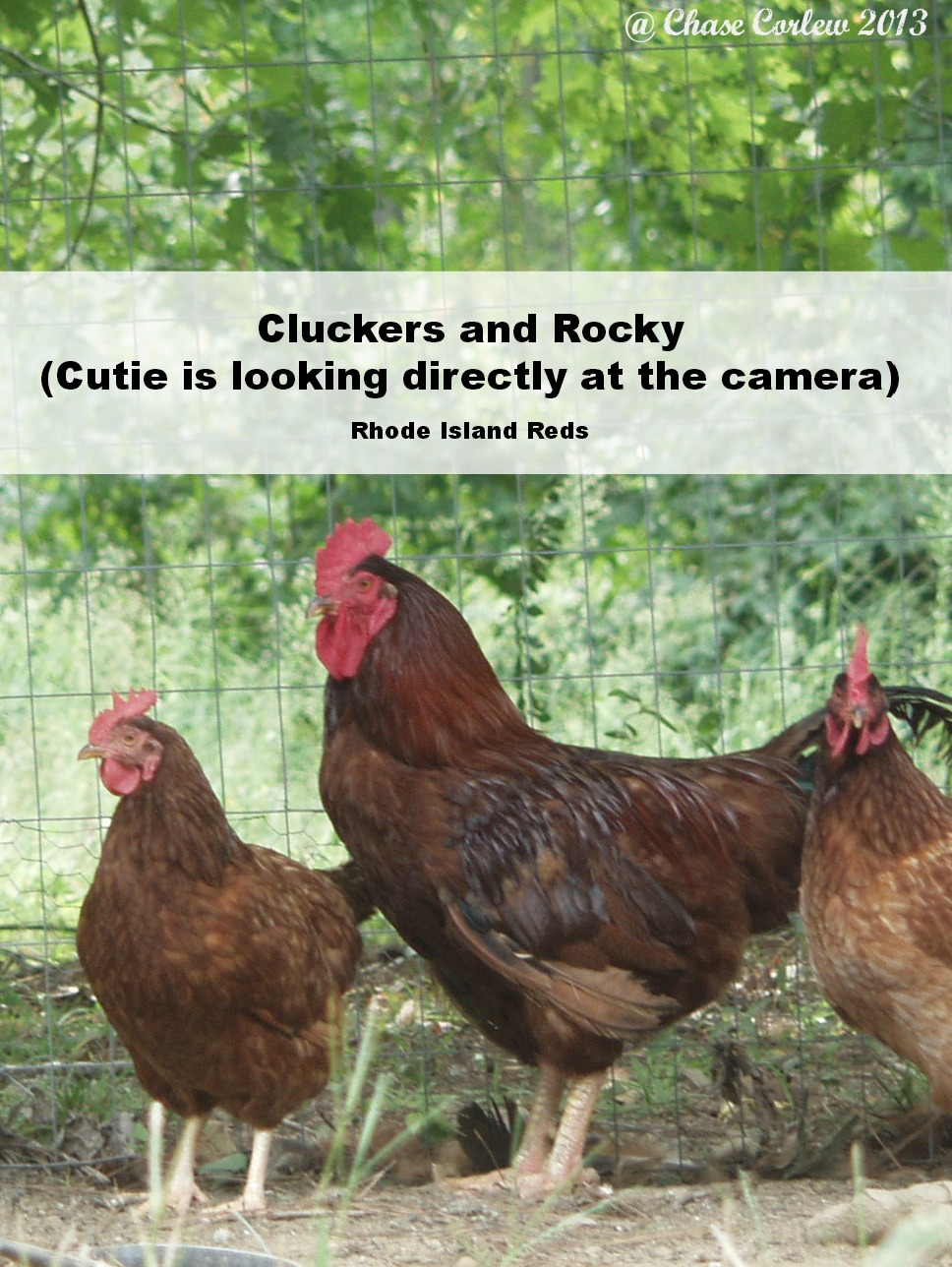
Cluckers, Rocky and Cutie Rhode Island RedsHi, I’m Gage, I am in 5th grade, homeschooled, and 11 years old. I am the owner of six chickens, about to be 36. I am going to be blogging about my chicken business on Live and Learn Farm.  My business name is going to be Deluxe Clucks and the business will be to sell eggs for eating, eggs for incubating, and sell chicks.

I am counting down the days till our chicks we bought are shipped out. It is a very nerve racking thing to order live animals through the mail, especially for the first time. We have ordered 30 chicks from Welp Hatchery.  The chicks should be alright coming in the mail. They will be shipped Priority Mail which will only take two days. They will not be hungry during their shipment because when a chick hatches it has a sack of food on its belly called the yolk and it will sustain them for a few days.  The chicks we ordered are five Barred Cochin Bantams, five Blue Cochin Bantams, 10 Red Frizzle Cochin Bantams and 10 White Frizzle Cochin Bantams.  The white and red frizzles have a mutation.  It does not cause them any trouble or dysfunction it’s just that their feathers curl out, not in.

Chicks are not hard to keep.  All they require is a brooder (a small area to keep them in until they are mature enough to be outside in the chicken pen), a heat source, food and water and, just recently, I found out chicks need a shady place to stay if they get hot.  And protection… we have had a problem with predators in the past. We once had about 25 Rhode Island Reds, now we are down to six, (5 hens and 1 rooster). The reason we only have 6 hens now is a coyote problem.

Right now we are preparing for their arrival. We are going to use a large box as their brooder, and as they grow we shall add more boxes. Chicks and chickens are very fun to keep and I enjoy being able to care for them. The other thing we will be using are… a heat lamp, food and waterers and puppy training pads (for flooring) I am looking forward to blogging about my experiences with my chicks and chickens.

And just today we got a surprise blessing! A friend went to Tractor Supply and was going to buy two chicks but the minimum was six. So she asked us if we want three or four chicks and we said yes! I have been so impatient that it was still a week till the chicks would even be mailed, so this is an answer to my prayer.  I’ll post pictures soon! 

See ya’ soon!


If you like this post, please share it!

  • Share on Facebook (Opens in new window) Facebook
  • Share on Pinterest (Opens in new window) Pinterest
  • Share on X (Opens in new window) X
  • Print (Opens in new window) Print
  • More
  • Email a link to a friend (Opens in new window) Email
  • Share on Reddit (Opens in new window) Reddit
  • Share on LinkedIn (Opens in new window) LinkedIn
  • Share on Tumblr (Opens in new window) Tumblr

Like this:

Like Loading…

Peek-a-boo

March 28, 2013 By: Trish Corlew3 Comments

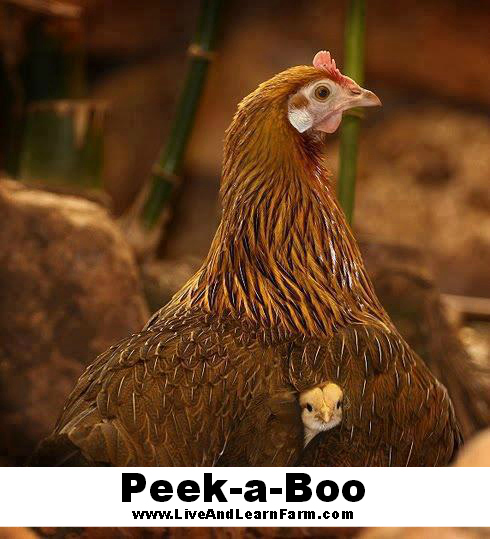
Peek-a-boo


Isn’t this just the cutest picture?  That baby looks like she is saying “peek-a-boo”!  It’s not one of our chickens, I just saw it on Facebook and had to share it!  We are all getting so excited about our baby chicks arriving in a couple of weeks!  My middle son, Gage will be opening the business centered around the chickens.  He will sell chicken eggs to eat and to hatch and sell baby chicks to raise.  If you haven’t read Pickin’ Chickens, that article explained in more detail why the boys each will have businesses in middle school.  For my Montessori friends, think practical life on steroids!  He will be responsible for cleaning out the coop and gathering the eggs, as well as feeding and watering them.  We all share chores in our house so he will have help, but it is his responsibility to ensure that all of this is taken care of daily.  This is another Montessori concept that is taking on a more mature dynamic.  He will also be creating and keeping the books for his business, so Gage will be learning all about accounting and economics, via running his own business instead of some esoteric, ambiguous case studies in a textbook that he cannot relate to.  

Gage will be the author for all the chicken posts on our blog once the chicks arrive (I will change the comments to be moderated once he starts posting). He will be photographing the chicks to document their growth and progress.  (Photography is one of those creative outlets that he is exploring so he won’t end up being an art vacuum like me! Thanks to his photography teacher Lori Lee, he will probably end up taking far better pictures than I do!)  So, he is learning how to market his business and write articles that will be not only informative, but also entertaining.

Gage is in the process of developing a name for his business now but he could use some help!  If you think of a great name for his business, he would love to hear it!  To give you some insight into Gage in order to help with the name suggestions:  He has a huge heart and an intense love for animals (this is why he has the animal biz).  He is our middle-son, so he is the peace-maker.  He is calm, loving and genuine.  He loves to kid around and is a bit of a prankster.  He loves legos, star-wars and the beach.  If you have any suggestions, please leave a comment below. We look forward to reading your suggestions!  

Until next time… 

If you like this post, please share it!

  • Share on Facebook (Opens in new window) Facebook
  • Share on Pinterest (Opens in new window) Pinterest
  • Share on X (Opens in new window) X
  • Print (Opens in new window) Print
  • More
  • Email a link to a friend (Opens in new window) Email
  • Share on Reddit (Opens in new window) Reddit
  • Share on LinkedIn (Opens in new window) LinkedIn
  • Share on Tumblr (Opens in new window) Tumblr

Like this:

Like Loading…

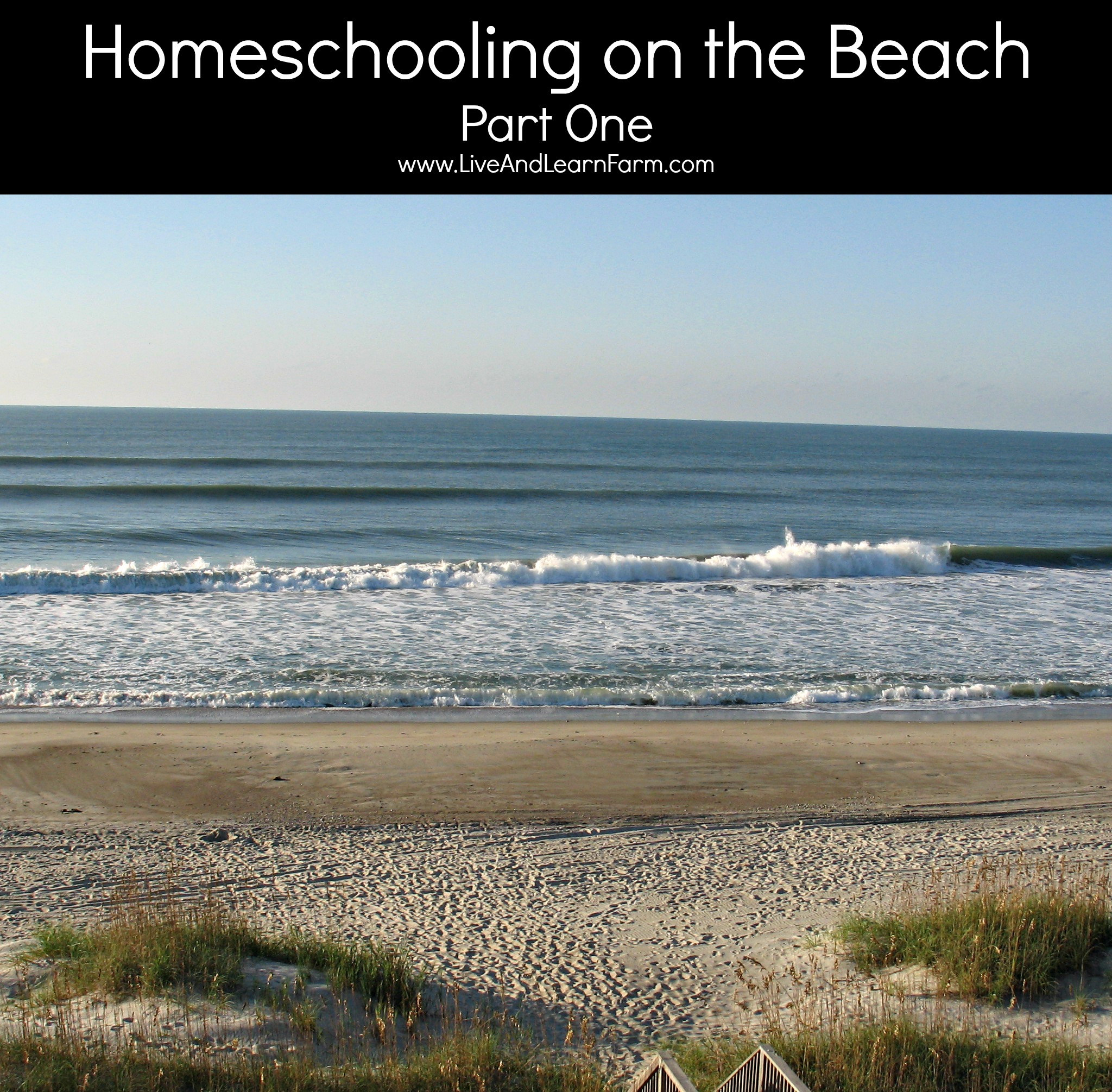
Homeschooling on the Beach Part 1

March 27, 2013 By: Live & Learn Farm6 Comments

Homeschooling on the Beach Part 1

Disclosure

Are you in the process of planning your beach vacation?  If you are, be sure to not leave your homeschool at home.  Studying with the ocean as your backdrop can bring in almost any subject you can imagine.  And, if you don’t live in an area where saltwater creatures are geographically close, you don’t want to miss this opportunity to teach it while you are on location!  Since we homeschool, we are not limited to vacations when our children are “out of school”.  We get to be creative about the “out of school” and vacation timing which allows us to make the most of the discounts available for the off seasons.  So you might consider a longer stay to get even more homeschooling in!  We spent a month on the coast of North Carolina in August and we learned so much about zoology and saltwater life that we could only learn there at the beach!  We did get run off the beach due to two hurricanes, but the absolute best homeschooling occurred right after the storms.  The storms brought in fabulous sealife, amazing shells and treasures from the depths!  So don’t be afraid to go in the late summer months!  Because there are just so many great opportunities and activities to teach at the beach, I have decided to break this topic into several posts .  So, part one will be about some lessons you might want to teach leading up to your beach vacation.  

If you have been following our blog, you already know that we take traditional curriculum and make them more hands-on and tactile learning materials.  With Apologia Swimming Creatures it is already a hands-on learning text, but we have added even more experiments and activities to help make your beach vacation a great experience homeschooling on the beach!  (Note we are a participant in the Amazon Services LLC Associates Program, an affiliate advertising program.  Any money received via this relationship is used for our homeschool!  PS. I’ve made a grand total of $0.00 from affiliate marketing… but the FTC says I have to tell you that IF you buy it, I will make 4% of the sale as commission.)

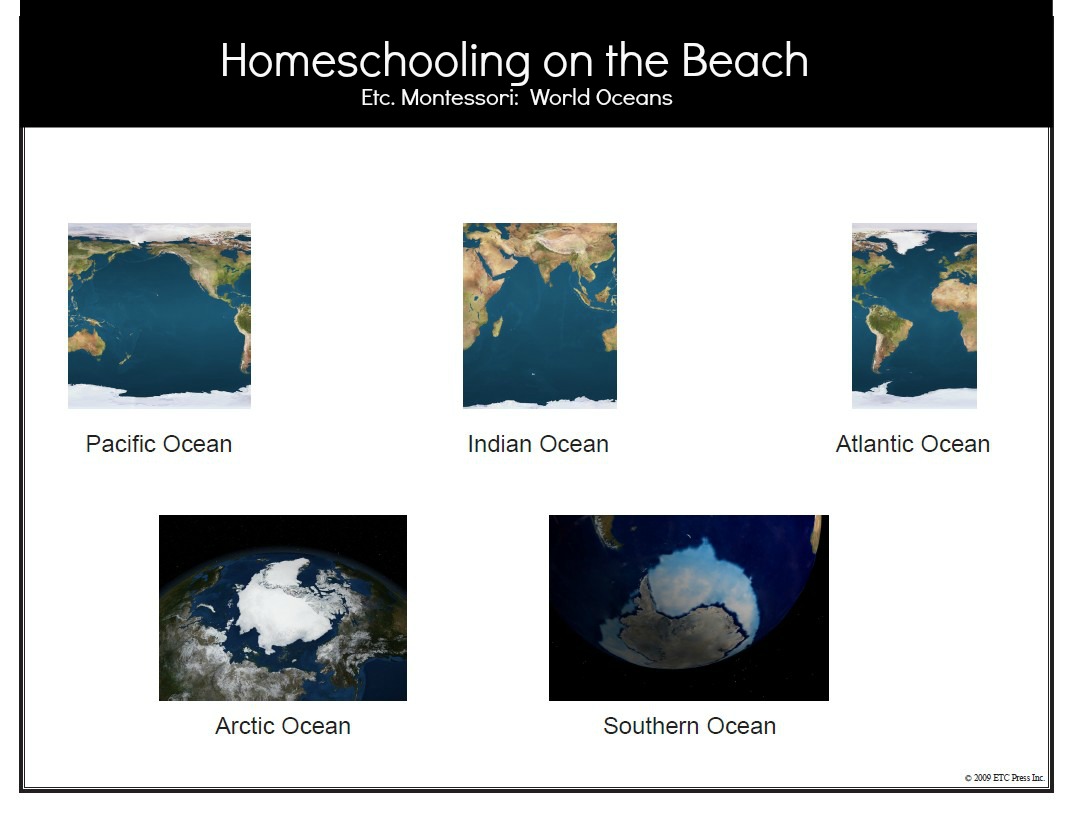
Geography is one of those subjects that I like to teach before we leave.  I will assume you are heading to an ocean, if you are reading this article, so the first thing we want to cover is the oceans of the world!  


World Oceans Etc. Montessori


Etc. Montessori has a beautiful free set of hands-on materials to cover World Oceans.  Click here to download them from their site.  


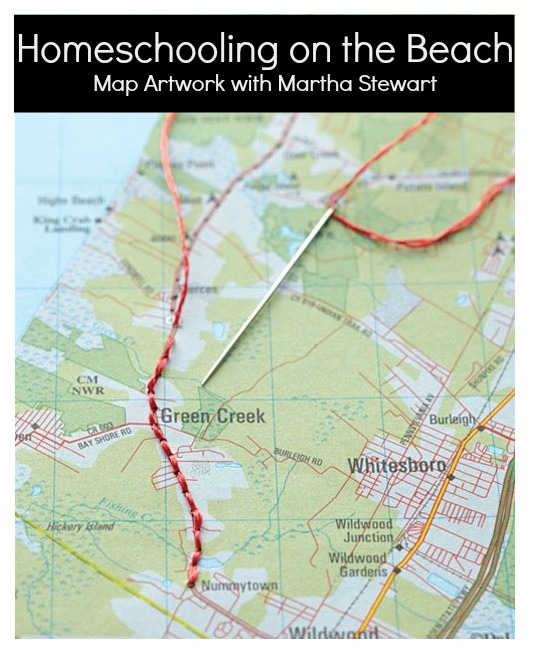
Mapping Vacation with Martha Stewart


Another great way to teach geography is to map out the trip.  This is another project you can do before you leave.  I love building up the anticipation of going on vacation.  Believe it or not, Martha Stewart really adds a bit of an artistic flair to this one.  I LOVE this idea and will be doing this myself!  


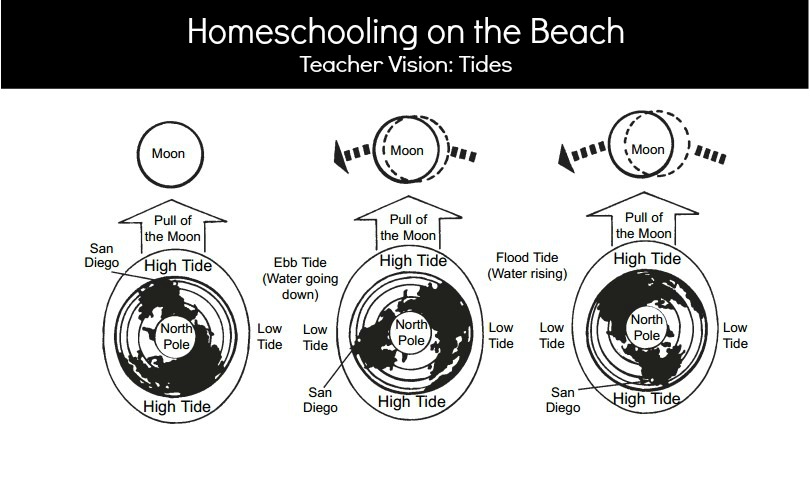
Tides Teacher Vision

Another subject to teach before you go to the beach is about tides.  What causes the tides?  Here is a great print out from TeacherVision (if you are not using the Apologia Swimming Creatures textbook).  There is a great experiment on ehow to demonstrate how the gravitational pull creates the tides by using a magnet and metal shavings.  However, I can’t find a single picture of the experiment online.  So, I guess we’ll do it and post the pictures 🙂  When I do, I’ll add the link here.  


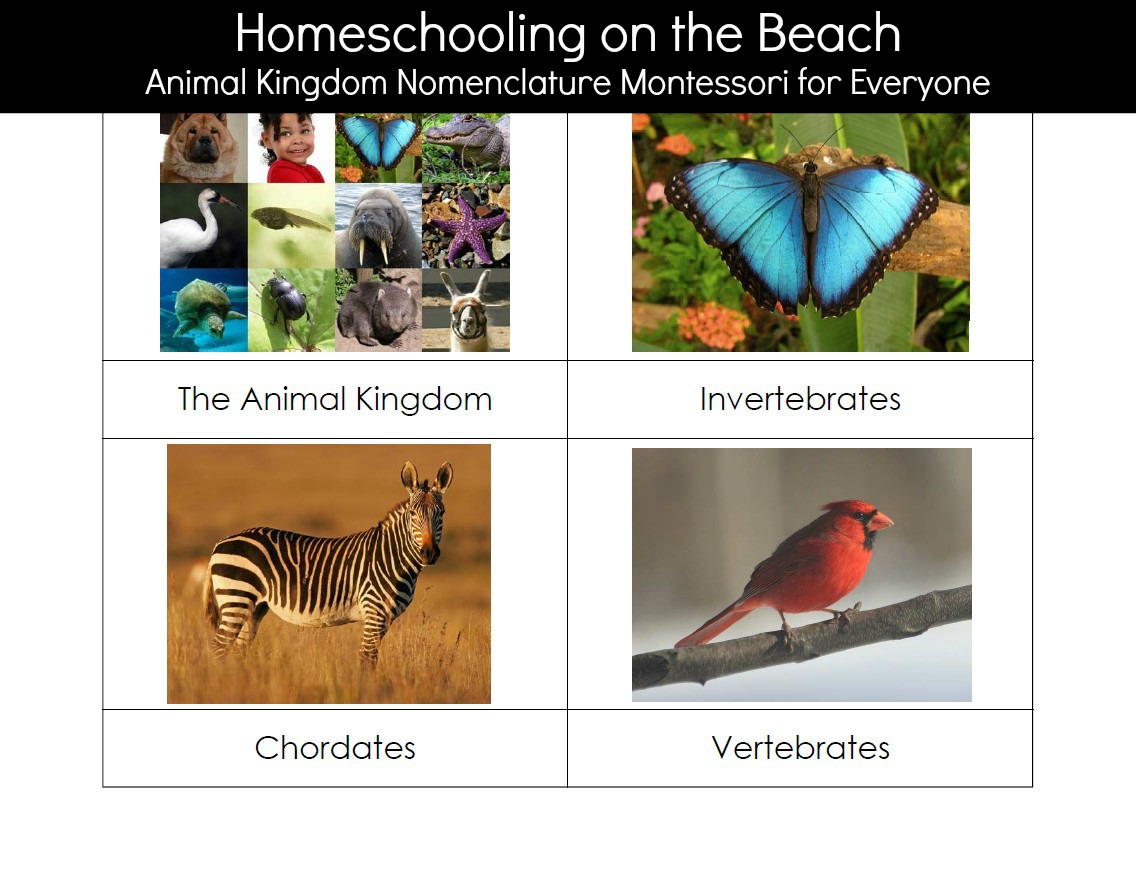
Animal Kingdom Nomenclature Montessori for Everyone

If you have not started studying Zoology yet, this would be a great time to introduce  animal classification, since so many ocean creatures are invertebrates (do not have backbones).  Montessori Materials has some free classification works here.  Matri Learning has a chart here.  The Helpful Garden has over 20 free sets of Zoology Materials to download including classification and sorting cards.  The Homeschool Den created some invertebrate cards and lots of other ocean activities! If you are in a position to purchase a beautiful set, Montessori for Everyone has wonderful nomenclature cards that are quite affordable.  


Here is a short “homeschooling on the beach” packing list.  If I have left anything off, please leave me a comment so I can add it! 

  • Nature Notebook to sketch / draw and journal in
  • Sketch Pencils
  • Magnifying Lens  
  • Binoculars
  • Camera (like we would go on vacation without one … )
  • Plastic Bags, Totes, Buckets, Bottles to take home some beach samples (sand, saltwater, shells, etc.)
  • Ocean Field Guide (can be borrowed from the library) 
  • Plain paper or a notebook and pencil
  • Ruler

Part two will be the various studies to do once you are at the beach!  I will add a link here once it is posted.    


Until next time… 


If you like this post, please share it!

  • Share on Facebook (Opens in new window) Facebook
  • Share on Pinterest (Opens in new window) Pinterest
  • Share on X (Opens in new window) X
  • Print (Opens in new window) Print
  • More
  • Email a link to a friend (Opens in new window) Email
  • Share on Reddit (Opens in new window) Reddit
  • Share on LinkedIn (Opens in new window) LinkedIn
  • Share on Tumblr (Opens in new window) Tumblr

Like this:

Like Loading…
« Previous Page
Next Page »
  • Pinterest
  • Facebook
  • Twitter
  • Google+
  • Sulia

Subscribe to our blog

Email

HHMTeamMember3-01

Winner-Top-Ten-BlogDesign10

Top Posts

  • But I Don't Want to be the Policeman!
    But I Don't Want to be the Policeman!
  • Hands-on Activity for Studying Globes and Maps
    Hands-on Activity for Studying Globes and Maps
  • Start a Home Economics Class in Your Homeschool
    Start a Home Economics Class in Your Homeschool
  • Brimwood Press Worldview Curriculum Review
    Brimwood Press Worldview Curriculum Review
  • nature journal post 2
    nature journal post 2

Affiliates / Sponsors

Give lynda.com

Shop Montessori Services

Newsletter Affiliate

We create and distribute our newsletter via MadMimi! It is SOOO easy to use! I highly recommend it!
Mad Mimi Email Marketing

Grab A Button

LiveAndLearnFarm.com Just select and copy the code below.
<a href="http://www.LiveAndLearnFarm.com" target="_blank"><img src="http://www.LiveAndLearnFarm.com/blog/wp-content/LiveLearnFarmButton.jpg" alt="LiveAndLearnFarm.com" width="125" height="125" /></a>

Copyright © 2026 · Modern Blogger Pro Theme By, Pretty Darn Cute Design

Loading Comments...

    %d