Live and Learn Farm

  • Home
    • About Us
    • Contact Us!
  • HomeSchool
    • All Inclusive
    • Apologia
    • Arts
    • Bible
    • Civics
    • Current Events
    • Curriculum
    • Elementary
    • Geography
    • History
    • Language Arts
    • Math
    • Middle School
    • Montessori
    • Other
    • Practical Life Skills
    • Science
    • Writing
  • Link Ups
    • Monday Middle & High School Link Up
  • Montessori
  • Teen Blogs
    • Gage – 13 Years Old
    • Chase – 14 Years Old
    • Blake – 10 Years Old
  • Shop
    • Cart
    • Checkout
    • My Account
  • Free!!!
  • Other Topics
    • Blogging
      • Facebook Series
    • Farmstead
      • Chickens
      • Cows
      • Permaculture Garden
    • Mom
You are here: Home / Archives for HomeSchool / Current Events

But I Don’t Want to be the Policeman!

October 21, 2025 By: Live & Learn Farmcomment

Oh please tell me I’m not the only one that feels like a cop half the time in their home and homeschool.  Don’t get me wrong, I’m not talking about the traffic cop, the one that stands at the intersection and directs traffic.  I’m talking about the cop that has to escort you to the station in order for something to get done!  The one that directs traffic is a pleasure… the escort is not so nice!  I love being mom and homeschool mom to three very active boys, aged 13, 12 and 9, but I don’t want to be the policeman for them all day everyday!  

This is a new issue we are having.  Up until recently, I was a SAHM and their dad was also a SAHD.  We have a small business that we run out of our home, but he was managing it and had been for three years.  Recently, my husband went back to work and I returned to running the business after my three year hiatus.  So the boys lost having both mom and dad home and fully engaged at all times in one fail swoop.  So, in the boys defense, we are all in adjustment mode right now.  But that being said, they have been sleeping till noon and not even getting all their chores done, much less all of the schoolwork (we homeschool year round).  I was having to run behind them and not only direct traffic, but escort them to get the job done!  I don’t have time to manage them at this level and never had to before.  At the same time, their dad is feeling less involved in their daily activities and almost inactive completely in the homeschool realm.
 

If you like this post, please share it!

  • Share on Facebook (Opens in new window) Facebook
  • Share on Pinterest (Opens in new window) Pinterest
  • Share on X (Opens in new window) X
  • Print (Opens in new window) Print
  • More
  • Email a link to a friend (Opens in new window) Email
  • Share on Reddit (Opens in new window) Reddit
  • Share on LinkedIn (Opens in new window) LinkedIn
  • Share on Tumblr (Opens in new window) Tumblr

Like this:

Like Loading…

Hands-on Activity for Studying Globes and Maps

October 21, 2025 By: Live & Learn Farmcomment

The easiest way to show the continents on earth is on a round globe, after all the earth is round. But there are times when we must use a map instead.  Many of us may not realize that a flat map is not the best representation of the relationship of  continents and their sizes. In order to get understand why, we will learn How to Make a Globe Flat and why we would!  

Distortion!  There is just no way to take that round globe and make it flat without deforming and transforming some of the sizes and relationships of the continents. One of the most common ways I’ve seen to demonstrate this distortion and how you can’t take a round earth and make it flat without have distortion is by using an orange peel. Another way that I found to be very effective in this demonstration is using a balloon  

To turn a spherical surface into a rectangle or other two-dimensional shape, we have to transform it or deform it by stretching it and/or compressing it. To see what happens when you deform a spherical surface, use a balloon. First blow up the balloon and tie it off. then draw rough outlines of the continents on the surface. Carefully cut off the tied end of the balloon and snip through the Pacific Ocean. Now try to flatten it into a useful shape. What does it look like? What happens to the shapes, sizes, and positions of the continents?

Cartographers have better ways to project spherical surfaces onto maps than stretching them by hand, but they’re subject to the same limitations. All projections deform the earth’s surface in some way, which means that every projection is in some way inaccurate. The trick in drawing or selecting a map is to find the projection that shows key information for a given region with the least inaccuracy.

The Mercator projection map commonly used on globes was developed in 1569 by a Flemish cartographer to aid navigators on their voyages.  Unfortunately, it shows land masses Greenland and Antarctica much larger than they actually are.   John Paul Goode.  He was very concerned about how the Mercator Projection map distorted the land mass sizes and thought it would confuse students.  So he set out to create a better map than the Mercator projection map. At the 1908 meeting of the Association of American Geographers, Goode described the Mercator Projection as “evil.”  It is for this reason he set out to create the Goode Interrupted Projection map.

If you like this post, please share it!

  • Share on Facebook (Opens in new window) Facebook
  • Share on Pinterest (Opens in new window) Pinterest
  • Share on X (Opens in new window) X
  • Print (Opens in new window) Print
  • More
  • Email a link to a friend (Opens in new window) Email
  • Share on Reddit (Opens in new window) Reddit
  • Share on LinkedIn (Opens in new window) LinkedIn
  • Share on Tumblr (Opens in new window) Tumblr

Like this:

Like Loading…

Brimwood Press Worldview Curriculum Review

October 21, 2025 By: Live & Learn Farmcomment

I was intrigued when I was offered the opportunity to review this curriculum, A Young Historian’s Introduction to Worldview, published by Brimwood Press. Being Messianic, I was a bit worried and wondered how hard it would be teach my children using a traditional Christian curriculum, since so many have a denominational slant or perspective. My Brimwood Press Worldview Curriculum Review will also include a link to the review bymy  thirteen year old son of the book, The Secret of the Scribe.  Be sure to click through and read that as well!

Why should we teach a biblical Worldview to our children? Because we interpret our whole world through our worldview glasses. Every major life question is filtered through those lenses, as well as every minor one. Questions like “Where did man come from?”, “Why do bad things happen to good people?”, “What happens to me when I die?”. Every struggle, tragedy, joy and triumph is seen through those same worldview glasses. It impacts every aspect of our lives… our views, our relationships, our wants, our desires and our priorities… so it’s pretty important to spend some time with our children talking about worldviews.  

How does this curriculum teach this subject?  A Young Historian’s Introduction to Worldview is only four chapters long and is the beginning of their worldview curriculum product line. The four lessons focus on:  

  • defining the concept of worldview
  • identifing what all worldviews have in common
  • providing a tool to identify and understand the differences between the worldviews
  • and looking at how worldview influences history

Each of the four lessons present hands-on activities, literature activities, thinking activities and discussion questions to help our children understand how a person’s worldview shapes their perspective of cultures, individuals, literature, history, art and entertainment.  It explains how faith and philosophy are the foundation of a person’s worldview. The guide helps students understand the basic beliefs of four  worldview families.  The worldviews/faiths presented are: monotheism, polytheism, pantheism, and naturalism.  Twelve different religions are discussed, contrasted and compared and then sorted into one of these four categories.  and their   are presented dispassionately, numerous opportunities are presented to discuss these concepts and solidify your family s values through Table Talk sections. Several hands-on activities are presented, including the construction of boxes (all materials provided) to graphically illustrate the differences in worldviews. These lessons are powerful, powerful, powerful! If you purchase the entire set of materials from Tools for Young Historians, it is recommended that you cover these four lessons first, as they give the student a lens through which to evaluate the rest of their study.

This curriculum is designed for children ages 10-13 or in 5th to 8th grades.  

The first lesson begins with a brief introduction of the concept of worldview as “the lens through which people see and understand the world in which they live.” To reinforce the concept of seeing through different lenses, students are directed to the computer to view a geodesic picture on the publisher’s website. They complete an observation sheet viewing the geodesic picture with the naked eye, through sunglasses, and through 3-D glasses (provided in the bag). Next, students either read or listen to the story of Lensland that demonstrates how conflicting perceptions can have significant consequences. Lensland’s citizens divide into three groups: Twoeyes, Multieyes, and Thickeyes. As one might guess from their names, each group has different eyes and, consequently, views things differently. Their conflicting visual perceptions lead toward a clash that threatens the peace and tranquility of Lensland. The lesson then transitions back to the real world with two examples of authors’ writing about DNA demonstrating how different “lenses” influence how people might interpret the same information. Discussion questions are interspersed through the lesson, and it ends with Table Talk: Family Discussions Facilitated by Parents. This section might be used by the entire family even if they are not all involved in the rest of the lesson. It reviews key ideas from the lesson and raises questions for family discussion.

The rest of the lessons follow similarly creative formats. The second lesson teaches what all worldviews have in common—the important questions about the meaning of life and existence of God. The third lesson introduces a simple way to divide worldviews into four categories, using some very creative hands-on activities. The fourth lesson primarily uses stories and discussion to demonstrate the impact of beliefs in selected historical settings.

I particularly like the discovery approach used to lead students into worldview concepts. By raising questions and working through activities, students are led to explore their own beliefs and recognize the important questions they need to ponder. Because younger students are particularly susceptible to the influence of teachers, it makes the most sense to use this course within the family so there is opportunity to identify and discuss the family’s religious beliefs. Each family can then decide how far they wish to go in exploring alternative worldviews.

Brimwood Press has also published a series of four historical novels that can be used with students in this age group as a springboard for worldview discussions. The novels are set in different time periods—ancient, medieval, early modern, and modern–and feature characters with different worldviews: polytheism, monotheism, naturalism and pantheism. Titles are: Secret of the Scribe, The Jeweled Astrolobe, Beneath the Cat’s Claw, and Rebel on the Path. Brimwood should soon have available (by 2009) the Christian Readers Guide for Engaging Thinkers, a discussion guide for all four books.

If you like this post, please share it!

  • Share on Facebook (Opens in new window) Facebook
  • Share on Pinterest (Opens in new window) Pinterest
  • Share on X (Opens in new window) X
  • Print (Opens in new window) Print
  • More
  • Email a link to a friend (Opens in new window) Email
  • Share on Reddit (Opens in new window) Reddit
  • Share on LinkedIn (Opens in new window) LinkedIn
  • Share on Tumblr (Opens in new window) Tumblr

Like this:

Like Loading…

Rat Race Rebellion – Just 18 Summers

June 9, 2014 By: Trish Corlewcomment

I worked in corporate America. I personally saw or was involved in lay-offs, corporate mergers, and hostile takeovers! And….. I have worked for myself for twenty years since then. From a quality of life perspective, I would not wish corporate America on my worst enemy, much less my own children. You might say, I am in full Rat Race Rebellion. 

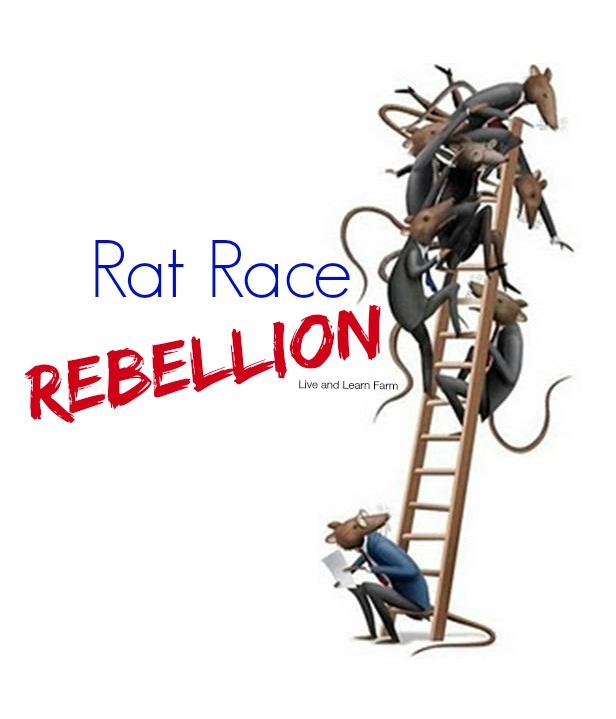
rat race rebellion 2

Let’s define what is “the rat race”.  The wikipedia definition goes something like this:  

“A rat race is an endless, self-defeating, or pointless pursuit. It conjures up the image of the futile efforts of a lab rat trying to escape while running around a maze or in a wheel. In an analogy to the modern city, many rats in a single maze expend a lot of effort running around, but ultimately achieve nothing (meaningful) either collectively or individually.”

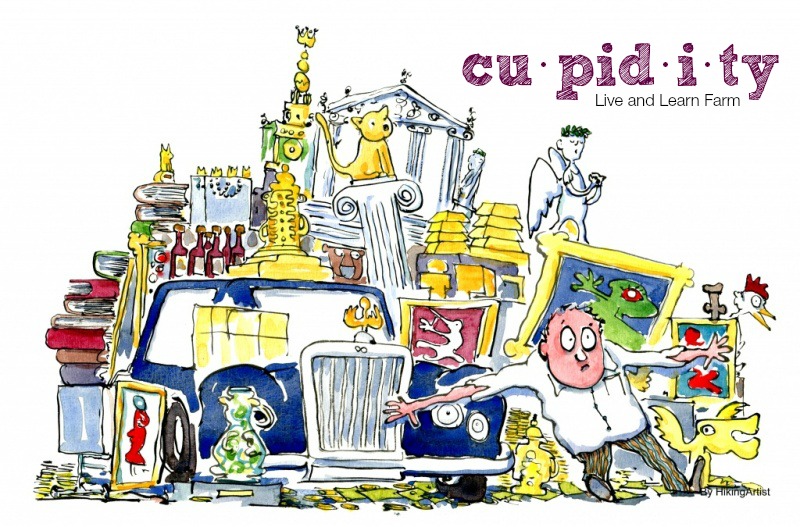
Now, honestly, that definition is a bit too sensational. For me, the rat race is completely and totally consuming… mind-wise, time-wise and focus-wise. In this model, we tend to focus on climbing the ladder and using the title / money equation as our measuring stick for success. We work long hours and look for the financial reward. And, if that is what success means to you and you are in corporate America, then you are in the right place. But it is a trap, one that is very seductive and alluring. We have become obsessed with material things, stuff, wealth and keeping up with the Joneses. America no longer makes anything, we have become a consumer economy… and what’s worse, it is funded by us going into debt! We have been programmed to want more and more stuff, Bigger is better… Live The American Dream! That dream is a nightmare for families. Our children don’t want more stuff… the stuff is a temporary fix to fill a hole that we are leaving. That is the irony. That lifestyle we are chasing to give our family bigger houses, nicer cars, more vacations is tearing apart the very fabric of our families, our communities, our nation. There is a word for this “American Dream” and we just coincidentally learned it this week while reading Henty’s The Young Carthaginian … cupidity. 

cupidity: eager or excessive desire, especially to possess something; greed.

cupidity 3

How much is enough?

What do you need to be happy? Our family keeps the Biblical feasts and each year for Sukkot (Feast of Booths), we camp out. Throughout this feast we discuss the ancient Israelites’ Exodus out of Egypt. We ask the boys if they were in a similar exodus could they take all their favorite things with them on their backs? No? How about in a wagon? Or an SUV? How about an 18 wheeler, would that fit it all? And we quickly realize how much stuff we have.  But is the stuff a luxury or just extra baggage? How much do we need to be happy? How much is enough? 

What are we teaching our children by what we do?

If we tell our children that stuff is not important, yet we live in a cluttered house, full of stuff that we just can’t part with… are we sending a mixed message to our children? Do we just have to have the coolest, newest, latest techno-gadget? Do we need monster screen TVs so we can spend more time watching sports than being with our family? Our children are watching us and they learn from what we do, not what we say! Did you open the Bible this week? Once? Did your children see you praying?  

What is the alternative to the Rat Race?

We have been introducing entrepreneurship into our homeschool for years now. The conversation has not been about money though. Rather we discuss the need to find what they love to do and create a business around it. How we hope to accomplish that is we introduce them to lots of experiences… things they might enjoy actually doing to earn a living. Their current list of opportunities they are exploring includes: photography, web design, photoshop, illustrator, homesteading, writing and blogging, farming, raising farm animals, refinishing furniture, and an online business. They have identified some things they don’t want to do for absolute sure, which is valuable insight too!

Do you want time to ponder? To create?

The one fact we constantly return to when discussing with our children their future lifestyles, relationships and careers is that THINGS can be traps. THINGS have to be maintained. Dusted. Cleaned. Protected. Insured. And there is a price you pay for each of those aspects. I wrote about this topic in another article, The Real Price of Stuff.  We have all become so accustomed to living the lifestyle of a rat chasing cheese that we have lost our ability to discern boundaries. Balance. We have lost our focus on people and relationships. We have forgotten the freedom of not being bound (enslaved) by debt.  

I know it is quite intoxicating to climb that ladder and use it as our measuring stick of success (especially when you are moving up). I owned a VERY successful and lucrative recruiting firm for technology employees. My clients included Disney, Hilton, International Paper, Williams Sonoma, Wal-Mart Corporate, Tyson Foods, just to name a few. I Get It. I lived it. However, I chose to homeschool and that choice had consequences. We are now in the process of dramatically downsizing our life (house, cars, clothes, farm, everything) to focus on our family, and our quality of life instead of chasing the money. And since our children are watching intently how we walk out this phase of our life, I pray we are sending a powerful message to them about where family, relationships, and friends rank in our life. One that they can learn from us without having to experience the same mistakes first-hand. 

downsizing upbeat

During this process I had to really explore what my own priorities were and discuss my decision with my husband. Did I want to return to the “drop my kids off corporate mom” or did I want to be a homeschool mom? I decided life is short and I want to spend all day, everyday with my children while they are still home. To limit the outside influences like peer pressure and the entertainment industry. To help them learn about the world and understand it through our system of values. That takes time. So, you see my rat race rebellion is really about prioritizing my time and choosing where I spend it. And in the process, teaching my children by my own actions.  

One final thought… I am NOT encouraging our children to not work for Corporate America… but I AM suggesting they investigate all their options. And, if they choose to go into Corporate America, they will have my blessing, because they will have their eyes wide open and hopefully will have their priorities firmly intact.  

Until Next Time… 

signature


I’m linking up with a few other blogs… New Life on a Homestead; A Mama’s Story; 


If you like this post, please share it!

  • Share on Facebook (Opens in new window) Facebook
  • Share on Pinterest (Opens in new window) Pinterest
  • Share on X (Opens in new window) X
  • Print (Opens in new window) Print
  • More
  • Email a link to a friend (Opens in new window) Email
  • Share on Reddit (Opens in new window) Reddit
  • Share on LinkedIn (Opens in new window) LinkedIn
  • Share on Tumblr (Opens in new window) Tumblr

Like this:

Like Loading…

Fowl pox in the Pen

December 2, 2013 By: Gagecomment

Disclosure

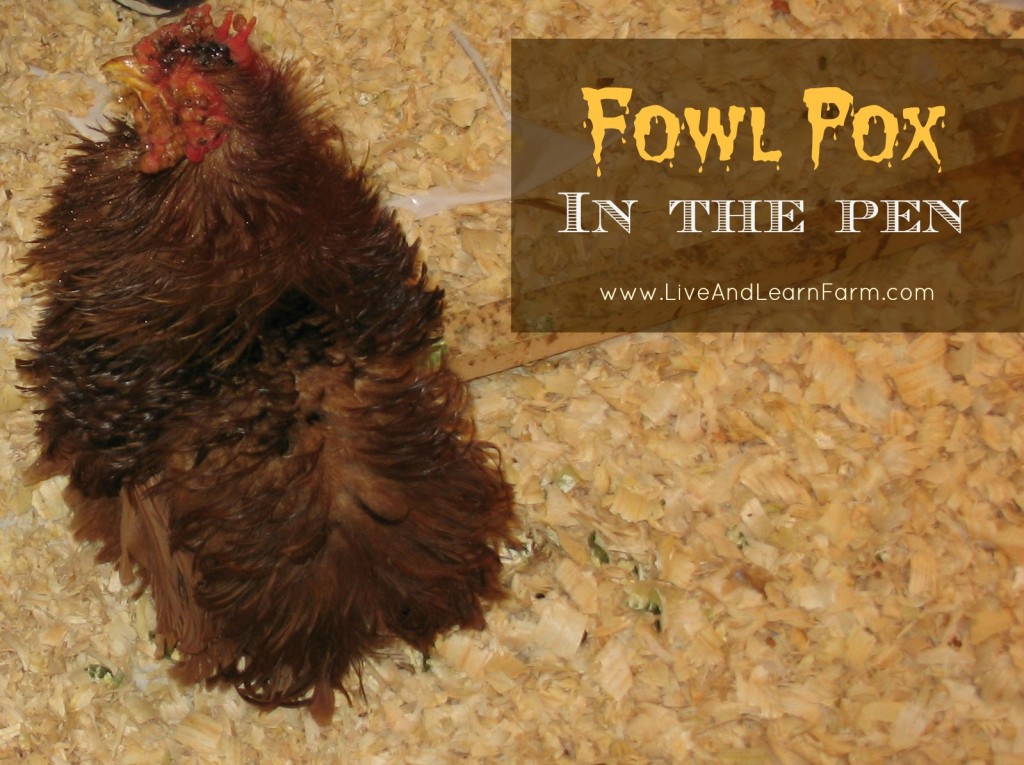
Good Afternoon! Sorry I have not posted in a while.  But I am going to be catching up and starting to write every Tuesday, so be watching for my posts.  Five weeks ago when I fed my chickens I noticed one of my frizzled red roosters standing out in the middle of the walkway not going after the food. This was strange since when I feed them they normally go straight for it.  As I approached him to see why his behavior was not normal, he turned his head to look at me, and I noticed a bunch of odd lesions on his comb and wattle.  Oh no, it looks like we have Fowl pox in the pen again.

Fowl Pox in the Pen

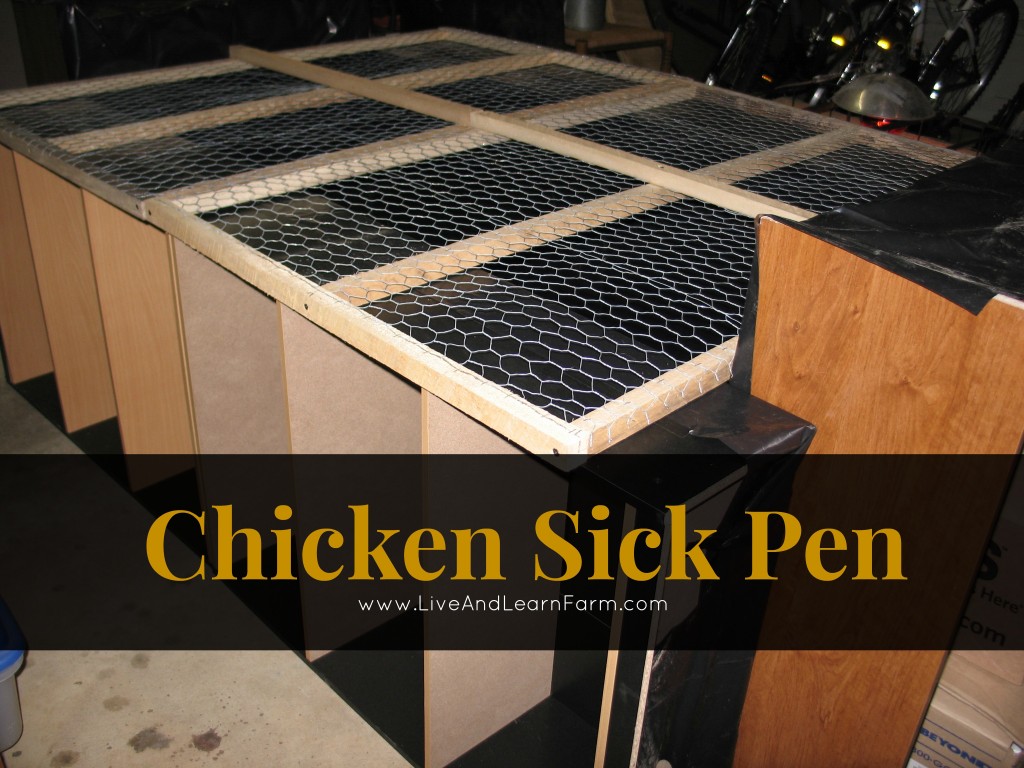
I immediately went to create a “sick pen” for him in the garage.  I reformed the small pen out of book cases and feed sacks that we made months ago.  I filled the floor of my makeshift pen with the normal pine shavings then I added a small roost, food and water feeders and a door. Then I worked with my brothers to catch him. I gingerly put him In the temporary pen and put the wire covers on top.

Chicken Sick Pen

I had been researching this virus and it is transmitted through mosquitoes which have the disease, the only other way it is transmitted is by getting in contact with another bird with the disease. Although it is not transmittable to anything but other birds it is still reasonable to to wear safety gloves when touching or treating the bird. At first my research brought up “If you leave it alone in about 1-2 weeks it will go away” after two and a half weeks I knew that my big boy had caught a severe case of it. By then it had covered both of his eyes and he could not see to drink or eat.  We regularly set him on a plastic bowl similar to what he regularly ate out of so he just knew what was in the bowl so he pecked down and ate food. But after it had come to three and a half weeks he mostly slept.

But then I discovered something scary… if his eyes stayed closed for too long, he could go blind.  The only treatment for the pox was to put drops of Saline solution on the pox via q-tips (being very careful not to get it in or around his eye) and Triple Antibiotic ointment for his eye.  I also started spoon feeding him yogurt. After about a week his pox started shrinking!  

Then we started the wait to see if his eyes would open.  In three days one of his eyes opened and he could see out of it!  Then the lesion fell off his other eye, but the eye had remained closed. Today when I went out to check on him, his closed eye is cracked (as in cracked open, barely)!!  Hallelujah!  So he might not go blind after all! He only has a few more lesions but it is still there so he will stay in his temporary pen a bit longer. Please pray for my rooster to get better 🙂

Update:  ~~A week later~~ Les is now free of fowl pox! Another small issue arose when we put him back in the pen.  All the other chickens wanted to pick fights with him. After being around him for a few hours, everything seemed to calm down, and was able to be around them without being picked on. Then 2 days ago, I went out to find him with a bloody comb and acting very shy toward the other chickens. He was all by himself standing in the chicken house door instead of out with them. I dropped what I was doing, grabbed my baby and ran back to the garage (where his makeshift brooder pen was) I gave him clean water and more food immediately. Then, when all was taken care of, I had to sit down and think of what to do, he could not stay in the sick pen in the garage, nor could he stay in the big chicken pen because Rocky our rooster didn’t want him in there. Nor could he stay in the little chicken pen with the newly nicknamed “rooster attack force”.  Then yesterday my answer came as our oldest rooster who was in the big chicken pen passed away.  He was over 6 years old!  Now my big boy Les can move in and take his spot as “the boss”. Thank you all for praying for my big boy!!!

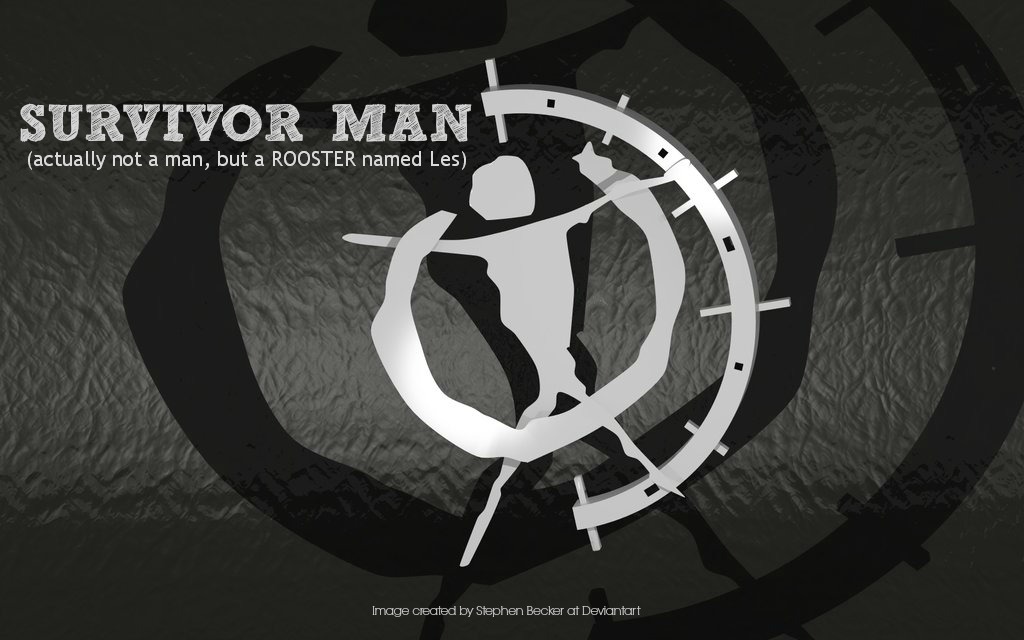
I decided to name him Les because of a man named Les Stroud who is best known for his television series Survivorman.

Survivor Man / Rooster named Les


See ya soon!

If you like this post, please share it!

  • Share on Facebook (Opens in new window) Facebook
  • Share on Pinterest (Opens in new window) Pinterest
  • Share on X (Opens in new window) X
  • Print (Opens in new window) Print
  • More
  • Email a link to a friend (Opens in new window) Email
  • Share on Reddit (Opens in new window) Reddit
  • Share on LinkedIn (Opens in new window) LinkedIn
  • Share on Tumblr (Opens in new window) Tumblr

Like this:

Like Loading…

Crazy Weather is Getting Crazier!

April 23, 2013 By: Trish Corlew5 Comments

We have been in full swing for about a month now in the garden.  We are switching from traditional gardening techniques to permaculture gardening and have been in planting mode.  All the cold weather crops were planted weeks ago.  We have been planting early spring crops for a couple weeks.  Just got horseradish in the ground and have so much more to do!  The fruit trees, blueberries and strawberries are in full bloom. The apple trees are blooming at the same time for the very first time since we planted them four years ago.  So this is the first season we even had any hope of getting an apple.  

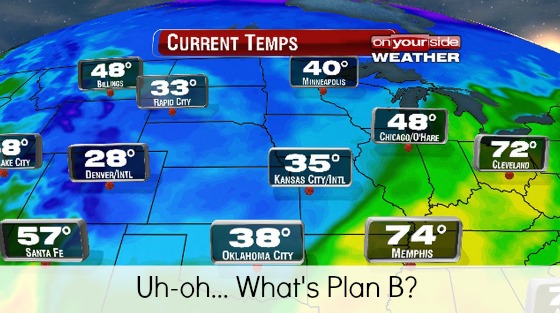
You are feeling pretty good about the progress you are making and the items that are getting knocked off your garden to do list and then you see this on your Facebook page from your local weather man.  I posted it with this comment:  “YOU HAVE GOT TO BE KIDDING ME!”  This crazy weather is getting crazier!


Temps are falling again in Late April!


The usual “Plan B” is to cover your crops and wait it out.  But that is not feasible  with fruit trees in a backyard garden environment.  Situations like this just makes me realize that no matter how planned and prepared we think we are, think again!  

I have always thought that Joseph’s Biblical example was to be our example… be prepared.  You remember, 7 years of plenty with putting back for the seven lean years?  But I have since come to realize that the blessings, the miracles, full protection and full supplication happened in the wilderness!  When they were completely reliant on God for every aspect of their very existence!  

Men will disappoint us, the weather will surprise us, but God doesn’t change.  It is in the wilderness where we will be provided for.  If you are unfamiliar with the provision He provided in the wilderness, pull out your Bibles and reread Exodus.  

Well, I’m off to go figure out how to cover what I can!  Until next time!  


If you like this post, please share it!

  • Share on Facebook (Opens in new window) Facebook
  • Share on Pinterest (Opens in new window) Pinterest
  • Share on X (Opens in new window) X
  • Print (Opens in new window) Print
  • More
  • Email a link to a friend (Opens in new window) Email
  • Share on Reddit (Opens in new window) Reddit
  • Share on LinkedIn (Opens in new window) LinkedIn
  • Share on Tumblr (Opens in new window) Tumblr

Like this:

Like Loading…

Daylight Saving Time Myths and Facts

March 7, 2013 By: Trish Corlew2 Comments

If you haven’t figured it out yet, I’ll go ahead and tell you, I love to use books and current events to strike my boys’ imagination!  They all love to read and I feed their imaginations and curiosity with beautifully illustrated, thought provoking books!  One of my favorites about the concept of time is About Time, A First Look at Time and Clocks. If you have not introduced calendars and clocks to your children, this is a great time and way to do so.  So, let’s get to my article about Daylight Saving Time Myths and Facts!

Daylight Saving Time Myths and Facts

In 2013, Daylight Saving Time (DST) started March 10th at 2:00 AM local time. This year, 2014, it starts March 8th. We move our clocks forward one hour in the spring (spring forward) and move our clocks back one hour in the fall. This got me wondering … who thought up this strange clock change to begin with! I’ve always heard that it was for the farmers to get more work in during the daylight hours and that it was originated in the US. Both of these appear to be persistent myths!  Since we are now focused on farming, I wanted to know what the facts are surrounding DST!!

Daylight Saving Time Spring Forward[/caption]So many sources credit Ben Franklin with creating DST. However, it seems most credible sources are now acknowledging that it originated in London,  England. A home builder, by the name of William Willett led the first campaign to implement daylight saving time after an early morning horseback ride in the countryside around London. With his own money, in 1907 he printed a brochure, The Waste of Daylight. It seems Willett became quite obsessed with this idea, but when he died in 1915, it had not been implemented in England.The first country to actually implement DST was Germany during World War I, in order to conserve electricity. In 1918, the United States followed suit as a wartime measure.

There are still states in the United States that do not recognize Daily Saving Time, Hawaii and Arizona. Many communities do not change their clocks nor do some of the US territories. In reality, only about one-quarter of the world’s population, in approximately 70 countries, observe daylight saving time.

What is the purpose for Daylight Saving Time?

To get better use of the daylight by having the sun rise one hour later in the morning and set one hour later in the evening.

There are several persistent myths surrounding daylight saving time that continue to be passed down. Here are a few:

    • Ben Franklin did not create this idea behind Daylight Saving Time.
    • It was not started in America for the farmers… they were actually opposed to it.  It was a wartime measure.  
    • There is not a federal rule or law which dictates that states or territories observe daylight saving time.  In 1966, Congress passed the Uniform Time Act, which standardized the start and end dates for daylight saving time but allowed individual states to remain on standard time if their legislatures allowed it.

So, now you know too!  Until next time…

If you like this post, please share it!

  • Share on Facebook (Opens in new window) Facebook
  • Share on Pinterest (Opens in new window) Pinterest
  • Share on X (Opens in new window) X
  • Print (Opens in new window) Print
  • More
  • Email a link to a friend (Opens in new window) Email
  • Share on Reddit (Opens in new window) Reddit
  • Share on LinkedIn (Opens in new window) LinkedIn
  • Share on Tumblr (Opens in new window) Tumblr

Like this:

Like Loading…

Free Filibuster Lesson

March 7, 2013 By: Trish Corlewcomment

 Filibuster Lesson edited


Current Events Study:  Senate Filibuster


(Note) If you have not introduced civics yet, you will need to cover a bit of background information to help your children grasp what a filibuster is.   A great site to use is:  http://bensguide.gpo.gov/3-5/index.html.  We love the Schoolhouse Rocks videos to help teach a concept.  Here is “I’m Just a Bill”:  


[Read more…]

If you like this post, please share it!

  • Share on Facebook (Opens in new window) Facebook
  • Share on Pinterest (Opens in new window) Pinterest
  • Share on X (Opens in new window) X
  • Print (Opens in new window) Print
  • More
  • Email a link to a friend (Opens in new window) Email
  • Share on Reddit (Opens in new window) Reddit
  • Share on LinkedIn (Opens in new window) LinkedIn
  • Share on Tumblr (Opens in new window) Tumblr

Like this:

Like Loading…

NASA and Asteroid-Laying-Hens courtesy of Mark Twain

February 14, 2013 By: Trish Corlewcomment

UPDATE:  NASA starts broadcasting at 1:00 CST.  They are showing images now though … here is the link:  http://www.ustream.tv/nasajpl2

—————————————————————————————

If anyone has read much about or by Mark Twain, you know what a character he was!  Well, this NASA news made me think of one of his more colorful quotes and what he might have said about this event!

Noise proves nothing.  Often a hen who has merely laid an egg cackles as if she laid an asteroid.  ~ Mark Twain

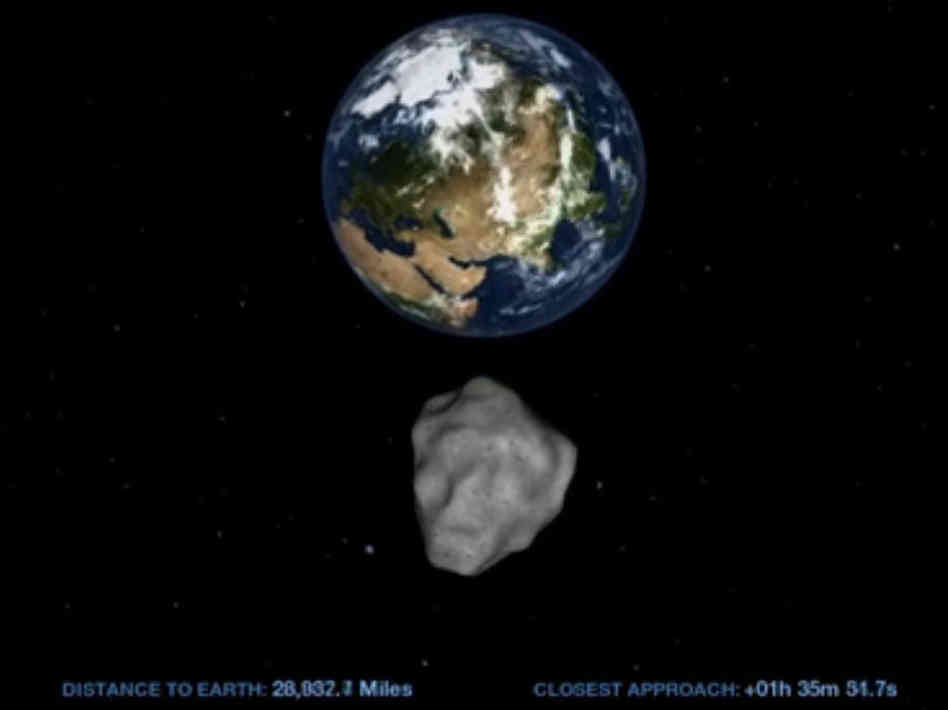
NASA Asteroid

We keep hearing about Asteroids hitting earth … but this week we have a twist to this common storyline!  No, hens are NOT laying asteroids, and No, an asteroid is not going to hit Earth (that I know of).   But something almost as spectacular is going to take place.  NASA is going to broadcast a live or near-live image of a near-Earth flyby of an Asteroid!!  “Near Earth” is relative of course, it’s still 17,200 miles away. The half-hour broadcast from NASA’s Jet Propulsion Laboratory in Pasadena, Calif., will incorporate real-time animation to show the location of the asteroid in relation to Earth, along with real-time or near real-time views of the asteroid from observatories in Australia, weather permitting. Here is a link to NASA with more information about this asteroid, NASA’s schedule and how to watch!  We will be watching here at Live and Learn Farm!  http://science.nasa.gov/science-news/science-at-nasa/2013/13feb_asteroidcoverage/

If you like this post, please share it!

  • Share on Facebook (Opens in new window) Facebook
  • Share on Pinterest (Opens in new window) Pinterest
  • Share on X (Opens in new window) X
  • Print (Opens in new window) Print
  • More
  • Email a link to a friend (Opens in new window) Email
  • Share on Reddit (Opens in new window) Reddit
  • Share on LinkedIn (Opens in new window) LinkedIn
  • Share on Tumblr (Opens in new window) Tumblr

Like this:

Like Loading…
  • Pinterest
  • Facebook
  • Twitter
  • Google+
  • Sulia

Subscribe to our blog

Email

HHMTeamMember3-01

Winner-Top-Ten-BlogDesign10

Top Posts

  • But I Don't Want to be the Policeman!
    But I Don't Want to be the Policeman!
  • Hands-on Activity for Studying Globes and Maps
    Hands-on Activity for Studying Globes and Maps
  • Start a Home Economics Class in Your Homeschool
    Start a Home Economics Class in Your Homeschool
  • Brimwood Press Worldview Curriculum Review
    Brimwood Press Worldview Curriculum Review
  • nature journal post 2
    nature journal post 2

Affiliates / Sponsors

Give lynda.com

Shop Montessori Services

Newsletter Affiliate

We create and distribute our newsletter via MadMimi! It is SOOO easy to use! I highly recommend it!
Mad Mimi Email Marketing

Grab A Button

LiveAndLearnFarm.com Just select and copy the code below.
<a href="http://www.LiveAndLearnFarm.com" target="_blank"><img src="http://www.LiveAndLearnFarm.com/blog/wp-content/LiveLearnFarmButton.jpg" alt="LiveAndLearnFarm.com" width="125" height="125" /></a>

Copyright © 2026 · Modern Blogger Pro Theme By, Pretty Darn Cute Design

Loading Comments...

    %d