Live and Learn Farm

  • Home
    • About Us
    • Contact Us!
  • HomeSchool
    • All Inclusive
    • Apologia
    • Arts
    • Bible
    • Civics
    • Current Events
    • Curriculum
    • Elementary
    • Geography
    • History
    • Language Arts
    • Math
    • Middle School
    • Montessori
    • Other
    • Practical Life Skills
    • Science
    • Writing
  • Link Ups
    • Monday Middle & High School Link Up
  • Montessori
  • Teen Blogs
    • Gage – 13 Years Old
    • Chase – 14 Years Old
    • Blake – 10 Years Old
  • Shop
    • Cart
    • Checkout
    • My Account
  • Free!!!
  • Other Topics
    • Blogging
      • Facebook Series
    • Farmstead
      • Chickens
      • Cows
      • Permaculture Garden
    • Mom
You are here: Home / Archives for HomeSchool / Montessori

Introduction to a Montessori Middle School

March 17, 2013 By: Trish Corlew2 Comments


Grand Rapids Montessori Logo


This is an introduction to a Montessori Middle School, or Erdkinder as Maria Montessori called it.  It is the essence of what we are trying to accomplish with our farm homeschool (we call it farmschooling).  You will see why we have the boys creating their own businesses, growing our own food, and managing the marketing of their businesses.  Each of our children will be blogging about their specific businesses.  I hope you will join us for these adventures!  Please remember all of our boys are 13 or younger, so grace and courtesy is appreciated.  Just as an FYI, I will be moderating all comments, emails, and communication.  

Montessori’s Vision of the Erdkinder (Farm School)

Maria Montessori first proposed her ideas for the reform of secondary education in a series of lectures given at the University of Amsterdam in January 1920. They were later published during the 1930s as part of her work From Childhood to Adolescence.  Dr. Montessori’s model of secondary education is based on her understanding of the developmental needs and learning tendencies of early adolescents. In addition to conceiving many of the reforms incorporated into today’s most innovative programs for early adolescents, Montessori added a unique idea: she recommended a residential school located in a country setting.  Montessori believed that by living independently of their families for a few years in a small rural community, young people could be trained in both the history of technology and civilization, while learning the practical habits, values, and skills needed to assume the role of an adult in today’s society. 

Envisioning a school where children would grow their own food and live close to nature, she called her program the Erdkinder, which translates from the Dutch as “the children of the Earth” or “children of the land.” Dr. Maria Montessori proposed living and working on a residential farm school as the best possible educational setting for young adolescents (twelve- to fifteen-year-olds) as they transitioned physically, cognitively, socially, emotionally, and morally to adulthood.  Montessori believed the demands of puberty warranted a holiday from traditional lecture-based instruction. Instead of confining students to classrooms, she proposed a program that would help them accomplish two key developmental tasks: becoming psychologically and economically independent. Only then, she argued, would young adolescents escape from the pettiness of traditional schooling and engage seriously in the realities of life in society.

Montessori envisioned the Erdkinder as a small community of teenagers and adults located in a rural setting. Here teachers and students would live and work together throughout the year, growing much of their own food and manufacturing many of the things they would need for life in the country, thereby developing a deep sense of their connection to the land and the nature and value of work.  She envisioned students, under adult upervision, managing a hostel or hotel for visiting parents. The students would sell farm goods and other products in their own store. These farm management and store economics would form the basis of meaningful academic studies.  The Erdkinder curriculum would encourage self-expression through music, art, public speaking, and theater. Students would also study languages, mathematics, science, history of civilizations, cultures, and technological innovations. The Erdkinder would possess a “museum of machinery,” where students could assemble, use, and repair their own farm equipment.

For many years the idea of a residential farm school was explored, but considered impractical. Montessori Secondary schools are now found in urban and suburban settings in the United States, with enrollments ranging from fewer than ten students to public school programs with more than 250 students.  The cost of organizing a residential Erdkinder program has been considered far too high for any one school to attempt; instead, Montessori Middle School programs attempt to incorporate as many Erdkinder components as possible. The Montessori community looked on with considerable interest in 2001 when David Kahn, Director of the North American Montessori Teacher’s Association (NAMTA), opened the Montessori Farm School in Huntsburg, Ohio in conjunction with the Hershey Montessori School. Serving students from ages twelve to fifteen, the Montessori Farm School is a lovely facility and an exciting project that has attracted widespread attention, including a substantial article in the London Times.

Many leaders in Secondary Montessori education believe that the future will lie primarily with nonresidential programs. The opening of the Farm School, and others like it that may follow, provides an opportunity to test one of Dr. Montessori’s hypotheses. She proposed that the residential community, with its artificially created social laboratory, will prove to be of most value in the completion of the development of mature, well adjusted young adults.  A piece prepared by David Kahn describing the Montessori Farm School in greater depth follows… the entire article can be found here.  

This article is from the Montessori Foundation 
 

If you like this post, please share it!

  • Share on Facebook (Opens in new window) Facebook
  • Share on Pinterest (Opens in new window) Pinterest
  • Share on X (Opens in new window) X
  • Print (Opens in new window) Print
  • More
  • Email a link to a friend (Opens in new window) Email
  • Share on Reddit (Opens in new window) Reddit
  • Share on LinkedIn (Opens in new window) LinkedIn
  • Share on Tumblr (Opens in new window) Tumblr

Like this:

Like Loading…

A Montessori Love Affair!

March 6, 2013 By: Trish Corlew3 Comments

Confession time… I’ve had a Montessori Love Affair for almost ten years.  I LOVE Montessori materials.  I love everything about them.  I love their colors (or lack of).  I love their weight or their daintiness, depending on which works I am admiring.  I love their design.  I love how they are presented.  I love the care and thought that goes into how to best present each work.  I love the shelves they sit on.  I love the clean, uncluttered environments they reside in.  I love the methodology and thought behind the works.  I just love, love, LOVE them.  

Montessori Love Affair
Article and Noun Symbols
Bead Material
Globes


I remember so vividly the first glimpse I had into the genius behind the Montessori pedagogy and materials.  My oldest son was in the primary (early childhood) classroom at our local Montessori school.  I was a drop-my-kids-off kind of mom and this was my first observation of the classroom with students working.  I sat quietly in my assigned, child-sized seat watching.  I remember being a bit bewildered as I watched the students go about their daily work.  I watched children blissfully content with being focused on the task at hand, whatever that task was.  I watched works being restored in their proper place with great care.  I saw teachers giving lessons to small groups while the other students stayed on task in their own areas.  I watched children taking turns and waiting for the opportunity to use a favored work.  I was mesmerized!  After my observation period concluded, I sat with the head of school and gleefully offered to purchase more of the particular favored work.  She smiled, patted my hand, and patiently explained why they didn’t need another of those works.  I WAS HOOKED!  My Love Affair officially began then and there!  I knew my children would be taught in a Montessori environment!    

[Read more…]

If you like this post, please share it!

  • Share on Facebook (Opens in new window) Facebook
  • Share on Pinterest (Opens in new window) Pinterest
  • Share on X (Opens in new window) X
  • Print (Opens in new window) Print
  • More
  • Email a link to a friend (Opens in new window) Email
  • Share on Reddit (Opens in new window) Reddit
  • Share on LinkedIn (Opens in new window) LinkedIn
  • Share on Tumblr (Opens in new window) Tumblr

Like this:

Like Loading…

2012-2013 Homeschool Curriculum

February 28, 2013 By: Trish Corlewcomment


We have homeschooled now for four years.  This is our 2012-2013 Homeschool Curriculum.  Prior to homeschooling, our boys attended a small local private Montessori school, where I was on the board for the school. Our boys have reached the point of thinking and working abstractly, so most of the Montessori materials are no longer used in our curriculum. So what do we now?  Come & see!!

I am very thankful that we stumbled blindly into a Montessori school! It has been a complete blessing to our family and continues to be … it is how we approach learning, education and life in general. So, although we have very traditional homeschool material now, our approach is still firmly grounded in the Montessori pedagogy.


#1 (oldest son) 7th Grade:

Exercises in English G
Grammar / English: Loyola Press Exercises in English G
Writing:IEW / Beautiful Feet Geography Study
IEW Beutiful Feet Geography Literature
Literature: GA Henty Books (Cat of Bubastes) and Jim Hodges Study GuideCat of Bubastes
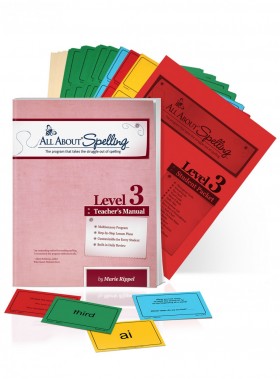
Spelling: All About Spelling 3-5All About Spelling 3
Vocabulary: Loyola Press Vocabulary in Action GVocabulary in Action G
 
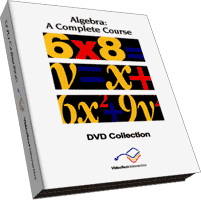
Algebra: Video Text Algebra II (CLEP when complete!)VideoText Algebra
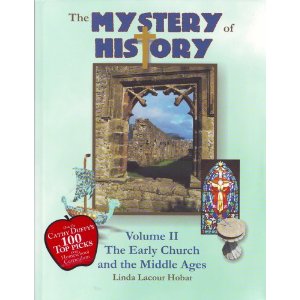
World History / Geography: Mystery of History IIMOH 2
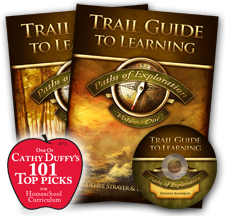
American History / Geography: Paths of Exploration /Trail Guide to LearningPOE TGTL
Civics: God and Government Volume 1God and Government 1
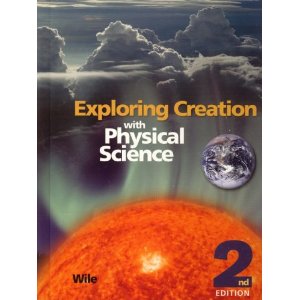
Science: Apologia Physical ScienceApologia Physical Science
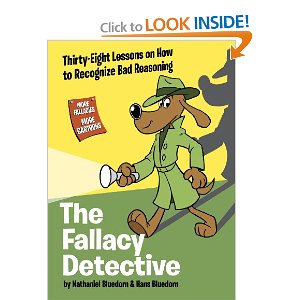
Logic: Fallacy DetectiveFallacy Detective
Foreign Language: Croghan Language Academy SpanishCroghan Language Academy
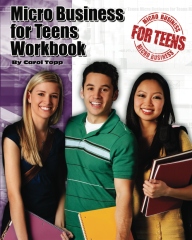
Economics: Starting a Micro Business for Teensmicrobus-workbk
Physical Education: Soccer, Karate
Scripture Studies: Torah, Writings, Prophets, NT
Electives: Art, PhotographyVirtual homeschool group name


(Middle Son) 6th Grade:

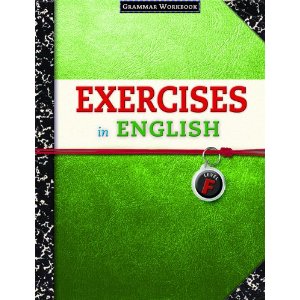
Grammar / English: Loyola Press Exercises in English FExercises in English F
Writing:IEW / Beautiful Feet Geography Study
IEW Beutiful Feet Geography Literature
Literature: GA Henty Books (Cat of Bubastes) and Jim Hodges Study Guide Cat of Bubastes
Spelling: All About Spelling 3-5All About Spelling 3
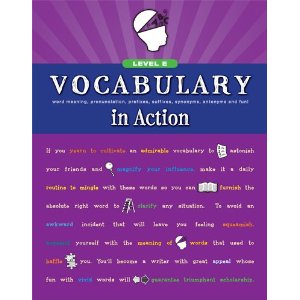
Vocabulary: Loyola Press Vocabulary in Action EVocabulary in Action E
Creative Writing: IEW / Beautiful Feet Geography Study
Algebra: Video Text Algebra I (CLEP when completes II!)VideoText Algebra
World History / Geography: Mystery of History IIMOH 2
American History / Geography: Paths of Exploration /Trail Guide to LearningPOE TGTL
Civics: God and Government Volume 1God and Government 1
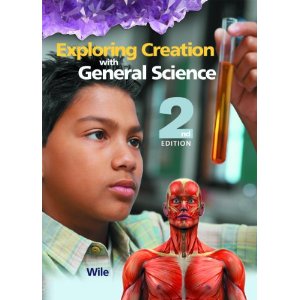
Science: Apologia General ScienceGeneral Science
Logic: Fallacy DetectiveFallacy Detective
Foreign Language: Croghan Language Academy SpanishCroghan Language Academy
Economics: Starting a Micro Business for Teensmicrobus-workbk
Physical Education: Soccer, Karate
Scripture Studies: Torah, Writings, Prophets, NT
Electives: Art, PhotographyVirtual homeschool group name


#3 (Youngest Son) 3rd Grade

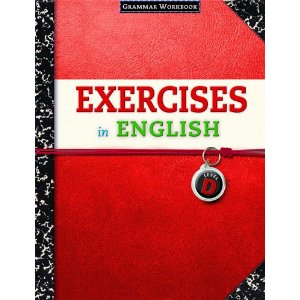
Grammar / English: Loyola Press Exercises in English DExercises in English D
Writing:IEW / Beautiful Feet Geography Study
IEW Beutiful Feet Geography Literature
Literature: GA Henty Books (Cat of Bubastes) and Jim Hodges Study GuideCat of Bubastes
Spelling: All About Spelling 3-5All About Spelling 3
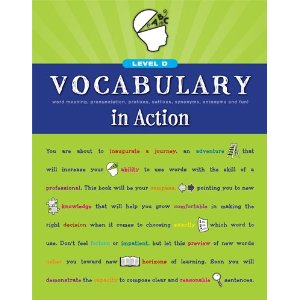
Vocabulary: Loyola Press Vocabulary in Action DVocabulary in Action D
Creative Writing: IEW / Beautiful Feet Geography Study
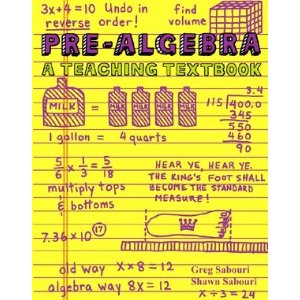
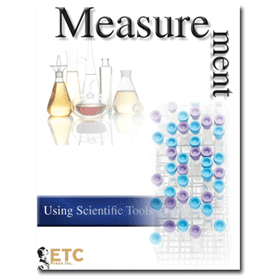
Teaching Textbooks Pre-AlgebraTeaching Textbooks Pre Algebra Montessori Measurement (EDUTC)Edutc Measurement    Montessori Area and Volume from Houston Montessori Center
World History / Geography: Mystery of History IIMOH 2
American History / Geography: Paths of Exploration /Trail Guide to LearningPOE TGTL
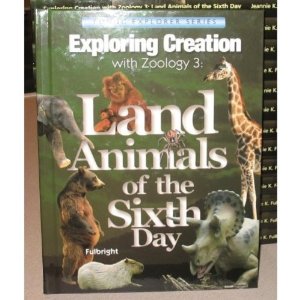
Science: Apologia Exploring Creation Zoology 3Exploring Creation Zoology 3
Logic: Fallacy DetectiveFallacy Detective
Foreign Language: Croghan Language Academy SpanishCroghan Language Academy
Economics: Starting a Micro Business for Teensmicrobus-workbk
Physical Education: Soccer, Karate
Scripture Studies: Torah, Writings, Prophets, NT
Electives: Art, PhotographyVirtual homeschool group name


Note:  Items above are linked to my Amazon affiliate account.  The very small amount of money that we make from our affiliation with Amazon is used to augment our curriculum needs.  Photos are shared from Amazon.

If you like this post, please share it!

  • Share on Facebook (Opens in new window) Facebook
  • Share on Pinterest (Opens in new window) Pinterest
  • Share on X (Opens in new window) X
  • Print (Opens in new window) Print
  • More
  • Email a link to a friend (Opens in new window) Email
  • Share on Reddit (Opens in new window) Reddit
  • Share on LinkedIn (Opens in new window) LinkedIn
  • Share on Tumblr (Opens in new window) Tumblr

Like this:

Like Loading…
« Previous Page
  • Pinterest
  • Facebook
  • Twitter
  • Google+
  • Sulia

Subscribe to our blog

Email

HHMTeamMember3-01

Winner-Top-Ten-BlogDesign10

Top Posts

  • But I Don't Want to be the Policeman!
    But I Don't Want to be the Policeman!
  • Hands-on Activity for Studying Globes and Maps
    Hands-on Activity for Studying Globes and Maps
  • Start a Home Economics Class in Your Homeschool
    Start a Home Economics Class in Your Homeschool
  • Brimwood Press Worldview Curriculum Review
    Brimwood Press Worldview Curriculum Review
  • nature journal post 2
    nature journal post 2

Affiliates / Sponsors

Give lynda.com

Shop Montessori Services

Newsletter Affiliate

We create and distribute our newsletter via MadMimi! It is SOOO easy to use! I highly recommend it!
Mad Mimi Email Marketing

Grab A Button

LiveAndLearnFarm.com Just select and copy the code below.
<a href="http://www.LiveAndLearnFarm.com" target="_blank"><img src="http://www.LiveAndLearnFarm.com/blog/wp-content/LiveLearnFarmButton.jpg" alt="LiveAndLearnFarm.com" width="125" height="125" /></a>

Copyright © 2026 · Modern Blogger Pro Theme By, Pretty Darn Cute Design

Loading Comments...

    %d