Live and Learn Farm

  • Home
    • About Us
    • Contact Us!
  • HomeSchool
    • All Inclusive
    • Apologia
    • Arts
    • Bible
    • Civics
    • Current Events
    • Curriculum
    • Elementary
    • Geography
    • History
    • Language Arts
    • Math
    • Middle School
    • Montessori
    • Other
    • Practical Life Skills
    • Science
    • Writing
  • Link Ups
    • Monday Middle & High School Link Up
  • Montessori
  • Teen Blogs
    • Gage – 13 Years Old
    • Chase – 14 Years Old
    • Blake – 10 Years Old
  • Shop
    • Cart
    • Checkout
    • My Account
  • Free!!!
  • Other Topics
    • Blogging
      • Facebook Series
    • Farmstead
      • Chickens
      • Cows
      • Permaculture Garden
    • Mom
You are here: Home / Archives for HomeSchool / Science

What exactly is an Asteroid anyway?

February 15, 2013 By: Trish Corlewcomment

Meteor explodes over central Russia, 500 people hurt – Yahoo! News.

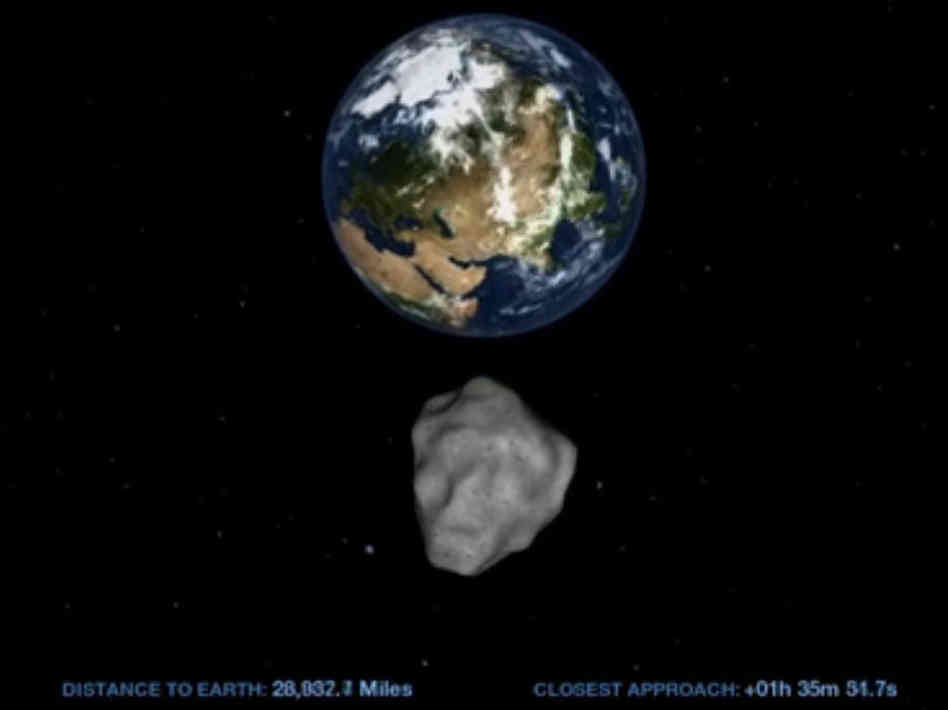
Nasa Asteroid 3

Well, it appears another asteroid story is big news.  So, we need to be giving our children a refresher on asteroids (or teaching them what they are, if they do not already know).  We used Apologia’s Exploring Creation with Astronomy book with lots of Montessori Solar System Works from Montessori Etc and from Montessori for Everyone.  

Let’s start with what an asteroid is… it’s a space rock orbiting the sun.  Many were formerly short-term comets that had ice on them.  But as they flew past the sun, the ice melted and the core was left, a rock, an asteroid. Lots of folks get asteroids and meteoroids confused.  The primary difference is size.  Asteroids are larger than meteoroids (usually larger than a football field).  What are asteroids made of?  Per Apologia Astronomy, they are made material like iron, rock and carbon.  When asteroids enter our atmosphere, they begin to burn up (just like a meteoroid and comet).  And when it hits earth it is called a meteorite.  There are millions out in space!

Here are several great sites to help children understand what asteroids are:

Ask An Astronomer for kids

Astronomy.com 

Lunar Post

My children just learn a topic better if there is some hands-on aspect of the assignment.  Here are two great asteroid activities for children and one is edible 🙂  :

Edible Asteroids

Model an Asteroid

I hope this has helped you get some ideas as to how to teach your children about asteroids!  Leave a comment and link to your activities so we can see how they turned out!!!

Until next time…
If you like this post, please share it!

  • Share on Facebook (Opens in new window) Facebook
  • Share on Pinterest (Opens in new window) Pinterest
  • Share on X (Opens in new window) X
  • Print (Opens in new window) Print
  • More
  • Email a link to a friend (Opens in new window) Email
  • Share on Reddit (Opens in new window) Reddit
  • Share on LinkedIn (Opens in new window) LinkedIn
  • Share on Tumblr (Opens in new window) Tumblr

Like this:

Like Loading…

NASA and Asteroid-Laying-Hens courtesy of Mark Twain

February 14, 2013 By: Trish Corlewcomment

UPDATE:  NASA starts broadcasting at 1:00 CST.  They are showing images now though … here is the link:  http://www.ustream.tv/nasajpl2

—————————————————————————————

If anyone has read much about or by Mark Twain, you know what a character he was!  Well, this NASA news made me think of one of his more colorful quotes and what he might have said about this event!

Noise proves nothing.  Often a hen who has merely laid an egg cackles as if she laid an asteroid.  ~ Mark Twain

NASA Asteroid

We keep hearing about Asteroids hitting earth … but this week we have a twist to this common storyline!  No, hens are NOT laying asteroids, and No, an asteroid is not going to hit Earth (that I know of).   But something almost as spectacular is going to take place.  NASA is going to broadcast a live or near-live image of a near-Earth flyby of an Asteroid!!  “Near Earth” is relative of course, it’s still 17,200 miles away. The half-hour broadcast from NASA’s Jet Propulsion Laboratory in Pasadena, Calif., will incorporate real-time animation to show the location of the asteroid in relation to Earth, along with real-time or near real-time views of the asteroid from observatories in Australia, weather permitting. Here is a link to NASA with more information about this asteroid, NASA’s schedule and how to watch!  We will be watching here at Live and Learn Farm!  http://science.nasa.gov/science-news/science-at-nasa/2013/13feb_asteroidcoverage/

If you like this post, please share it!

  • Share on Facebook (Opens in new window) Facebook
  • Share on Pinterest (Opens in new window) Pinterest
  • Share on X (Opens in new window) X
  • Print (Opens in new window) Print
  • More
  • Email a link to a friend (Opens in new window) Email
  • Share on Reddit (Opens in new window) Reddit
  • Share on LinkedIn (Opens in new window) LinkedIn
  • Share on Tumblr (Opens in new window) Tumblr

Like this:

Like Loading…

It’s For The Birds!

February 14, 2013 By: Trish Corlewcomment

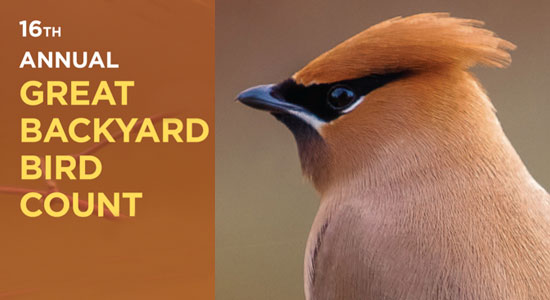
It’s time to count birds in our backyards again!! We had so much fun doing this count while studying Apologia Exploring Creation Zoology 1 Flying Creatures, I figure we will make this an annual event. The birdcount starts Friday, February 15th! So you only have a little while left to get organized and everything printed! This year we are adding a few things to help with our bird identification.

2013gbbc

http://www.birdsource.org/gbbc

If you live in TN here is a link to the most common birds you will probably see in your backyard. She has created cards to print and study. So Montessori!  http://jimmiescollage.com/2011/02/more-bird-resources-for-backyard-bird-count/

We will also be using the Bird Observation sheet from The Notebooking Fairy. I LOVE these notebooking pages and have used various ones from this site. Check out all the free ones!  http://notebookingfairy.com/2011/11/bird-observation-notebooking-page/

We have been meaning to do this and just have not gotten around to creating nature journals yet. I am hoping we will make these this summer! But for those that have progressed to that point, here is a great bird feeder journal page:  http://www.arps.org/users/ms/pricen/Science7/biology/Ecology/nfj/birdfder.pdf

We are going to make some homemade bird seed ornaments and suet to hang out. You can find recipes for both here:   http://handsonaswegrow.com/homemade-heart-bird-feeder/# and http://www.artistic-garden.com/easy-homemade-bird-suet-recipe/

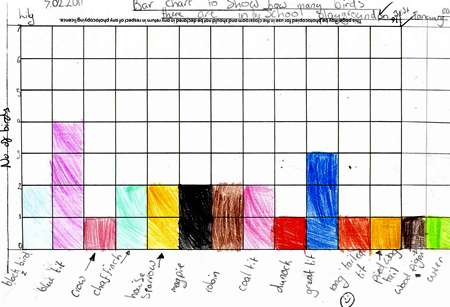
After you complete the bird count, create a graph or a pie chart with your children to show visually which birds are the most common and which are least common. Here is one I found online that is very simple, but easy to understand.

Bird Bar Chart


I hope you will get involved in the great backyard bird count! It is a fun and easy way to encourage our children to slow down, look around and for us to demonstrate making the time to study nature and our Father’s creation! Remember, our children do what we do, not what we say!!

Until Next Time….

If you like this post, please share it!

  • Share on Facebook (Opens in new window) Facebook
  • Share on Pinterest (Opens in new window) Pinterest
  • Share on X (Opens in new window) X
  • Print (Opens in new window) Print
  • More
  • Email a link to a friend (Opens in new window) Email
  • Share on Reddit (Opens in new window) Reddit
  • Share on LinkedIn (Opens in new window) LinkedIn
  • Share on Tumblr (Opens in new window) Tumblr

Like this:

Like Loading…

Penicillin and Bread Crumbs through history….

February 14, 2013 By: Trish Corlewcomment

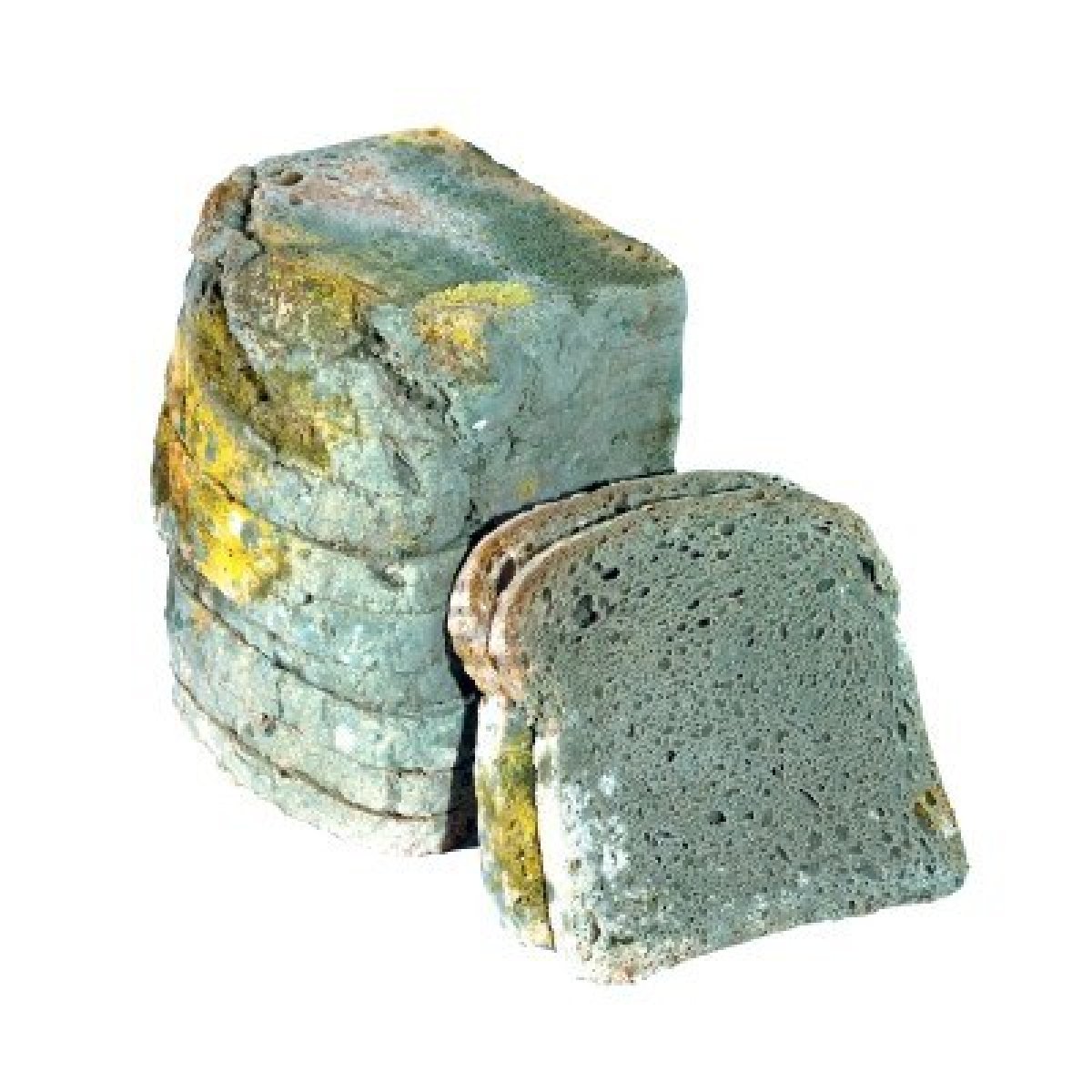
Today, February 14th, Sir Alexander Fleming is credited with discovering penicillin in 1929, but many scientists and physicians before him left a literal bread trail to be followed. I’m actually surprised that it took until 1929 to realize that penicillin could kill some bacteria!  Why?  Because all the way back in ancient Egypt, moldy bread was being used to treat wounds around 2650 BC.  During this time in history, the physicians did not study “why” something seemed to work, they just kept doing it “if” it did work… the trial and error method. (Can you imagine being the first person that received moldy bread for their wounds!?! LOL!)  So, literally “penicillin” had been used as an antibiotic for thousands of years, they just didn’t call it “penicillin”!  So why did it take so long to identify this mold and its benefits?  Moldy Bread


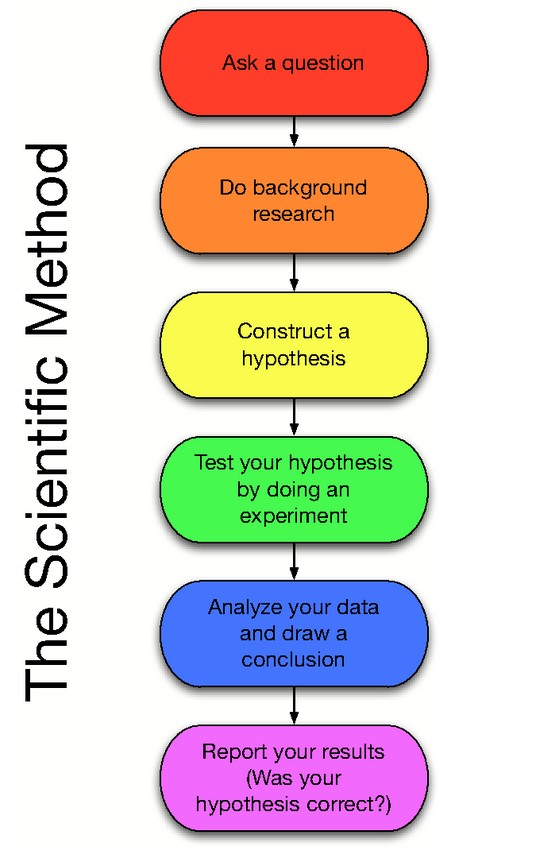
I think that is the valuable lesson to learn here is to understand why it took thousands of years to “discover” penicillin.  A fun experiment would be to grow mold with your children.  Here is a link to one to do with your children.  http://explorable.com/mold-bread-experiment  (Important Note from the experiment:  some people are allergic to mold!  If this is the case, do not pick the Mold Bread Experiment. Always wear gloves and mask, wash your hands, and don’t eat or drink whilse you are performing this study.)   Discuss the drawbacks of the “trail and error” approach of the ancient world and the benefits of scientific inquiry and the scientific method.  For anyone that likes to create a tactile work for children to learn with, here is a great concept map of the scientific method that we used.  We printed this twice.  The first copy we cut each oval out and laminated them individually.  The children use these ovals to build the model for the scientific method.  The second print out we laminated whole creating the control (answer key) for the work.  


Scientific Method Concept Map


http://schurger-science.wikispaces.com/file/view/scientificmethod.jpg/84615519/scientificmethod.jpg

This topic is covered in Apologia General Science in the first Module.

Until next time…

If you like this post, please share it!

  • Share on Facebook (Opens in new window) Facebook
  • Share on Pinterest (Opens in new window) Pinterest
  • Share on X (Opens in new window) X
  • Print (Opens in new window) Print
  • More
  • Email a link to a friend (Opens in new window) Email
  • Share on Reddit (Opens in new window) Reddit
  • Share on LinkedIn (Opens in new window) LinkedIn
  • Share on Tumblr (Opens in new window) Tumblr

Like this:

Like Loading…

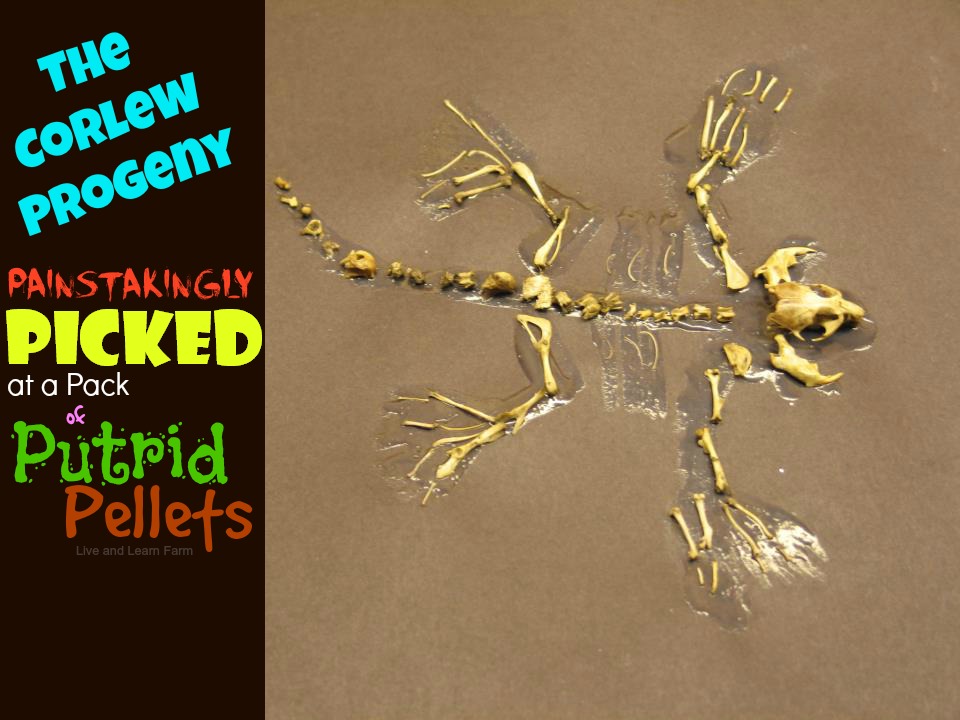
The Corlew Progeny Painstakingly Picked at a Pack of Putrid Pellets

February 13, 2013 By: Trish Corlewcomment

Here lie the skeletal remains found in Blake’s owl pellet dissection experiment. It is the skeleton of a rodent and believe it or not, we had a blast getting this rodent! Here is a quick lesson on owl digestion from Live and Learn Farm.

Owl Pellet Dissection 

1. Owl’s cannot digest the bones and fur of their prey, so they regurgitate those items … creating a fur covered putrid pellet. I actually expected it to be worse than it really was, but you could absolutely smell it! 

2. The pellet can have several rodents or just random bones from various prey. Chase, my oldest son,  dissected one pellet and he found huge bones, but no skull (a decapitated rodent?). Gage found several skulls in the same pellet but the rest of the skeleton could not be recreated due to lack of bones. Blake found the rodent pictured above.

Disclosure

Here is a great site to help you with the lesson plan. http://naturalsciences.sdsu.edu/classes/lab2.2/lab2.2.html.

Believe it or not, you can purchase owl pellets on Amazon and we love this kit because it comes with the bone chart! But be sure you either have the probes or that the kit comes with them.  The bones are so fragile that you don’t want to use your fingers to sort through the pellet. You will break these tiny fragile bones by accident! 

We glued Blake’s on a plain piece of construction paper. We used Sobo Craft Glue to glue it on the paper. (UPDATE: 1.5 years later, the bones are still stuck tight to the paper and hanging above Blake’s desk).  Blake’s science curriculum that led to this experiment is Apologia Exploring Creation with Zoology 3: Land Animals of the Sixth Day.  It is a very hands-on curriculum with lots of experiments!   My Montessori-raised boys would not do well without this kind of hands-on learning! All of my boys have loved Apologia!  I love the fact that we can stick with the same product line throughout our homeschool years for science because Apologia offers curriculum from the 1st grade through high school!

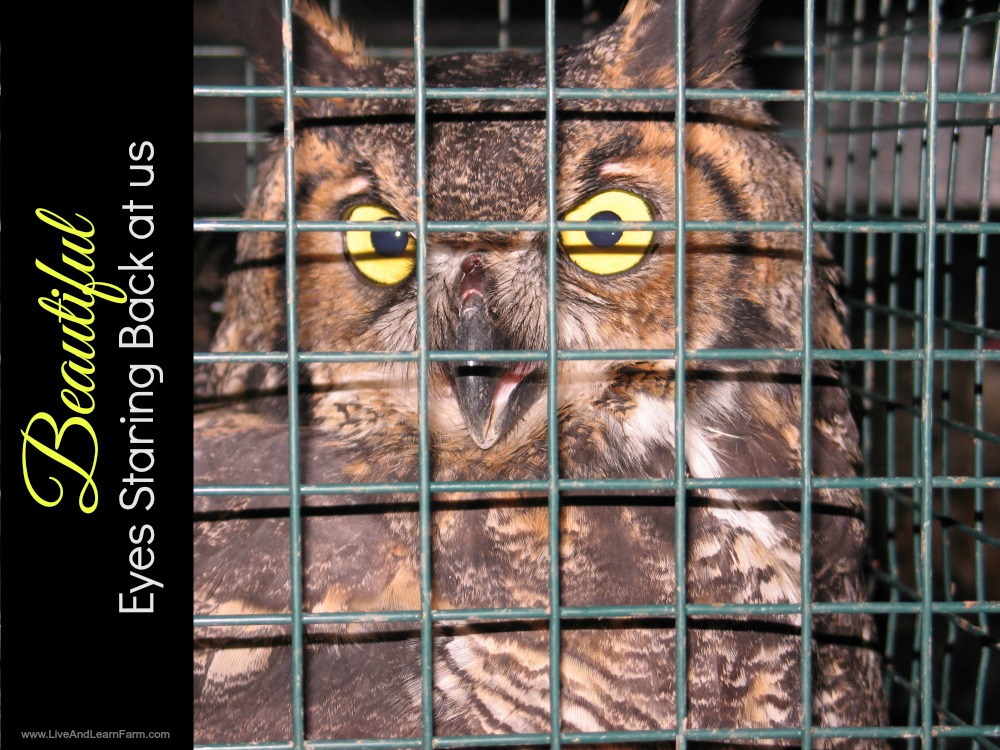
This experiment led to us doing an extensive search of our farm property for “evidence” of owls on our trees.  Yes, that means we walked around looking for exactly what you think we were looking for! Poop on sides of trees! As a matter of fact, ever since this dissection, we now always look for evidence of owls.  And just in case you are curious, we still have not found a tree with “evidence”!  However, we are absolutely positive we have owls on our property because we have actually caught one by accident!  Apparently they are great at hiding their location during the day!  If you have any suggestions on how to find them, please leave a comment… we are completely stumped!  

Beautiful Eyes Staring Back at us

Until next time…


If you like this post, please share it!

  • Share on Facebook (Opens in new window) Facebook
  • Share on Pinterest (Opens in new window) Pinterest
  • Share on X (Opens in new window) X
  • Print (Opens in new window) Print
  • More
  • Email a link to a friend (Opens in new window) Email
  • Share on Reddit (Opens in new window) Reddit
  • Share on LinkedIn (Opens in new window) LinkedIn
  • Share on Tumblr (Opens in new window) Tumblr

Like this:

Like Loading…
« Previous Page
  • Pinterest
  • Facebook
  • Twitter
  • Google+
  • Sulia

Subscribe to our blog

Email

HHMTeamMember3-01

Winner-Top-Ten-BlogDesign10

Top Posts

  • But I Don't Want to be the Policeman!
    But I Don't Want to be the Policeman!
  • Hands-on Activity for Studying Globes and Maps
    Hands-on Activity for Studying Globes and Maps
  • Start a Home Economics Class in Your Homeschool
    Start a Home Economics Class in Your Homeschool
  • Brimwood Press Worldview Curriculum Review
    Brimwood Press Worldview Curriculum Review
  • nature journal post 2
    nature journal post 2

Affiliates / Sponsors

Give lynda.com

Shop Montessori Services

Newsletter Affiliate

We create and distribute our newsletter via MadMimi! It is SOOO easy to use! I highly recommend it!
Mad Mimi Email Marketing

Grab A Button

LiveAndLearnFarm.com Just select and copy the code below.
<a href="http://www.LiveAndLearnFarm.com" target="_blank"><img src="http://www.LiveAndLearnFarm.com/blog/wp-content/LiveLearnFarmButton.jpg" alt="LiveAndLearnFarm.com" width="125" height="125" /></a>

Copyright © 2026 · Modern Blogger Pro Theme By, Pretty Darn Cute Design

Loading Comments...

    %d